Loading
Loading
This demo is private. Sign in with the Google account it was shared with.
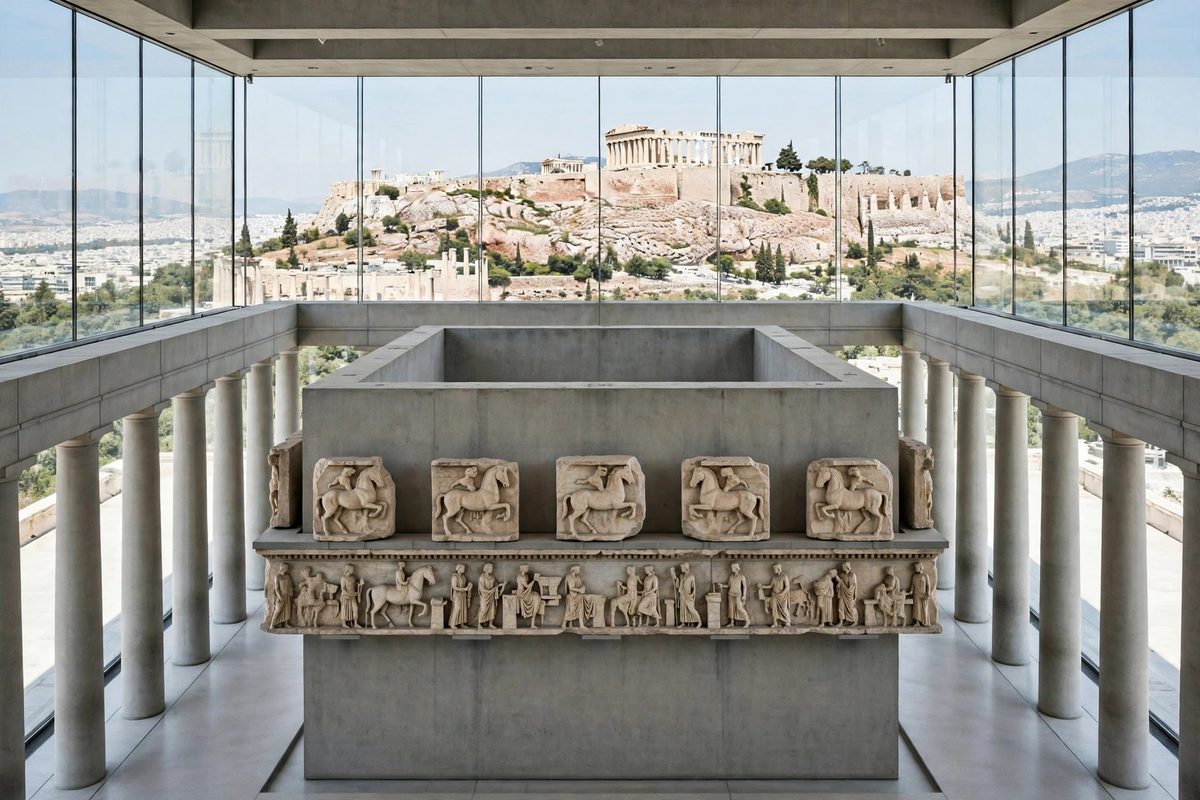
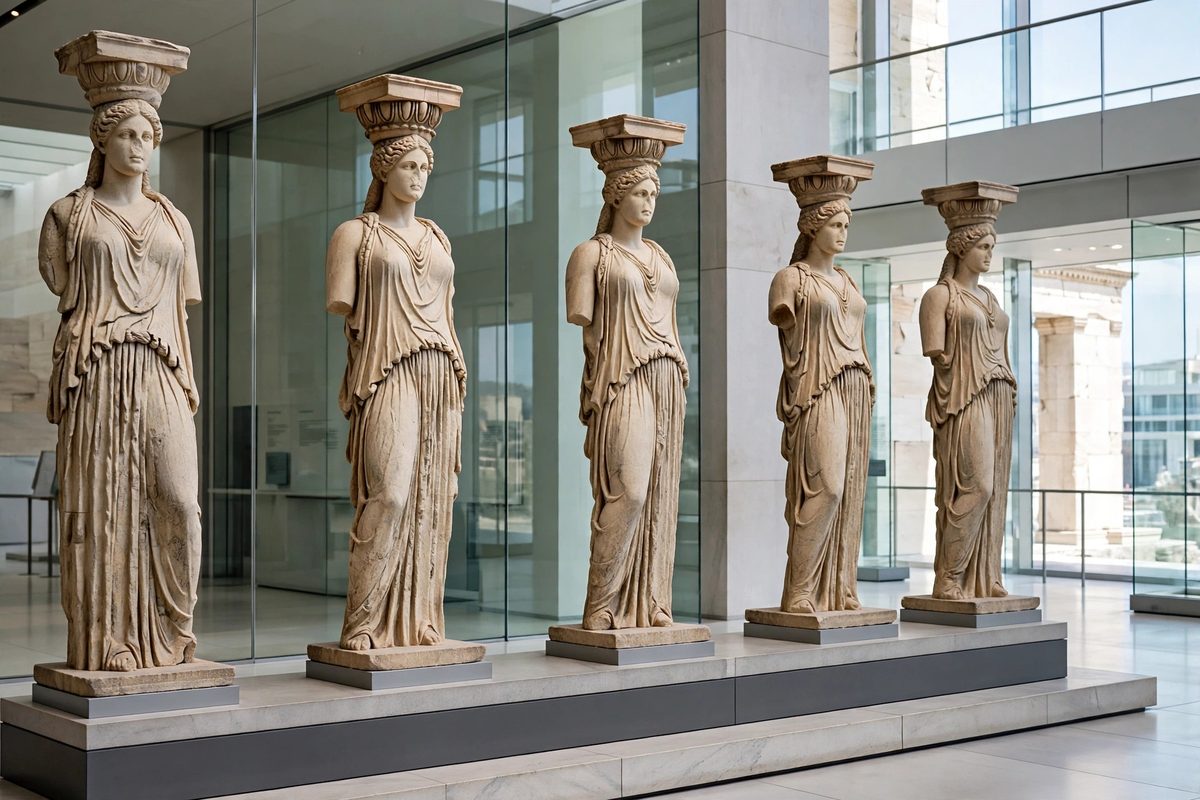
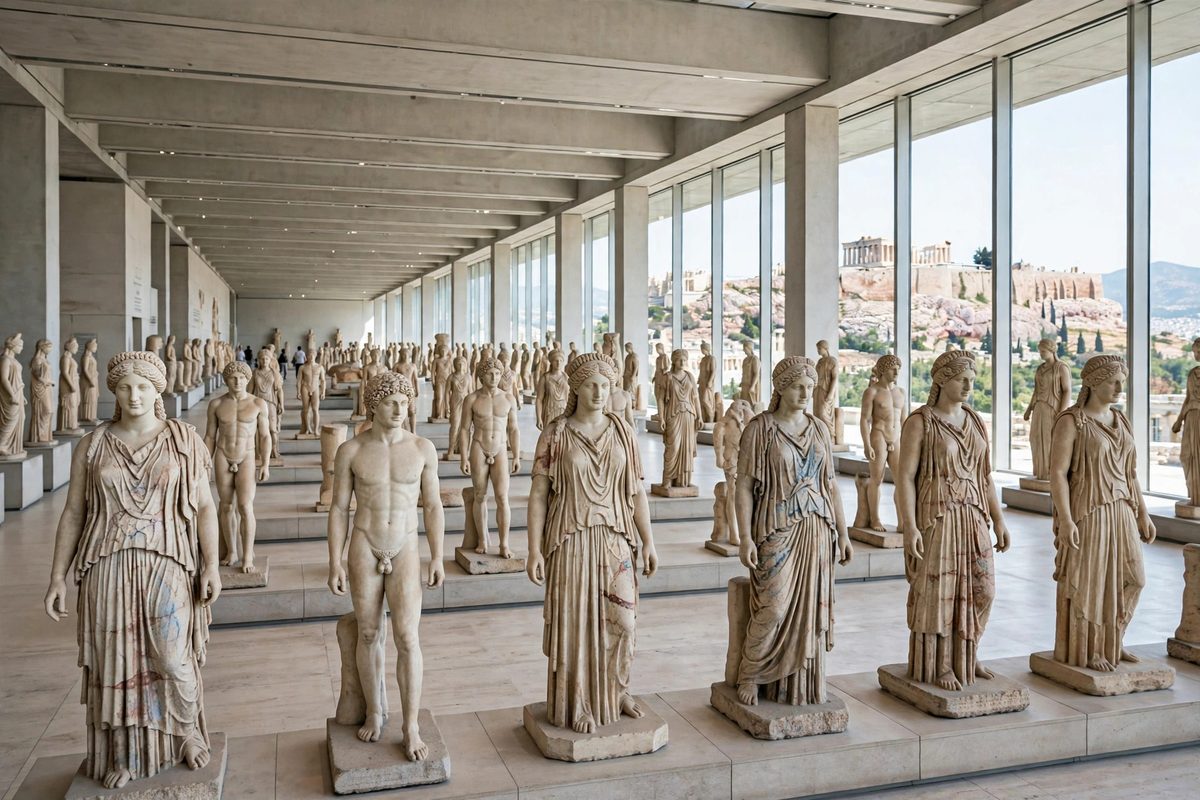
The Parthenon’s own sculptures at eye level, in the same light, 300 meters from the temple they came from.
TripAdvisor page · Google Maps
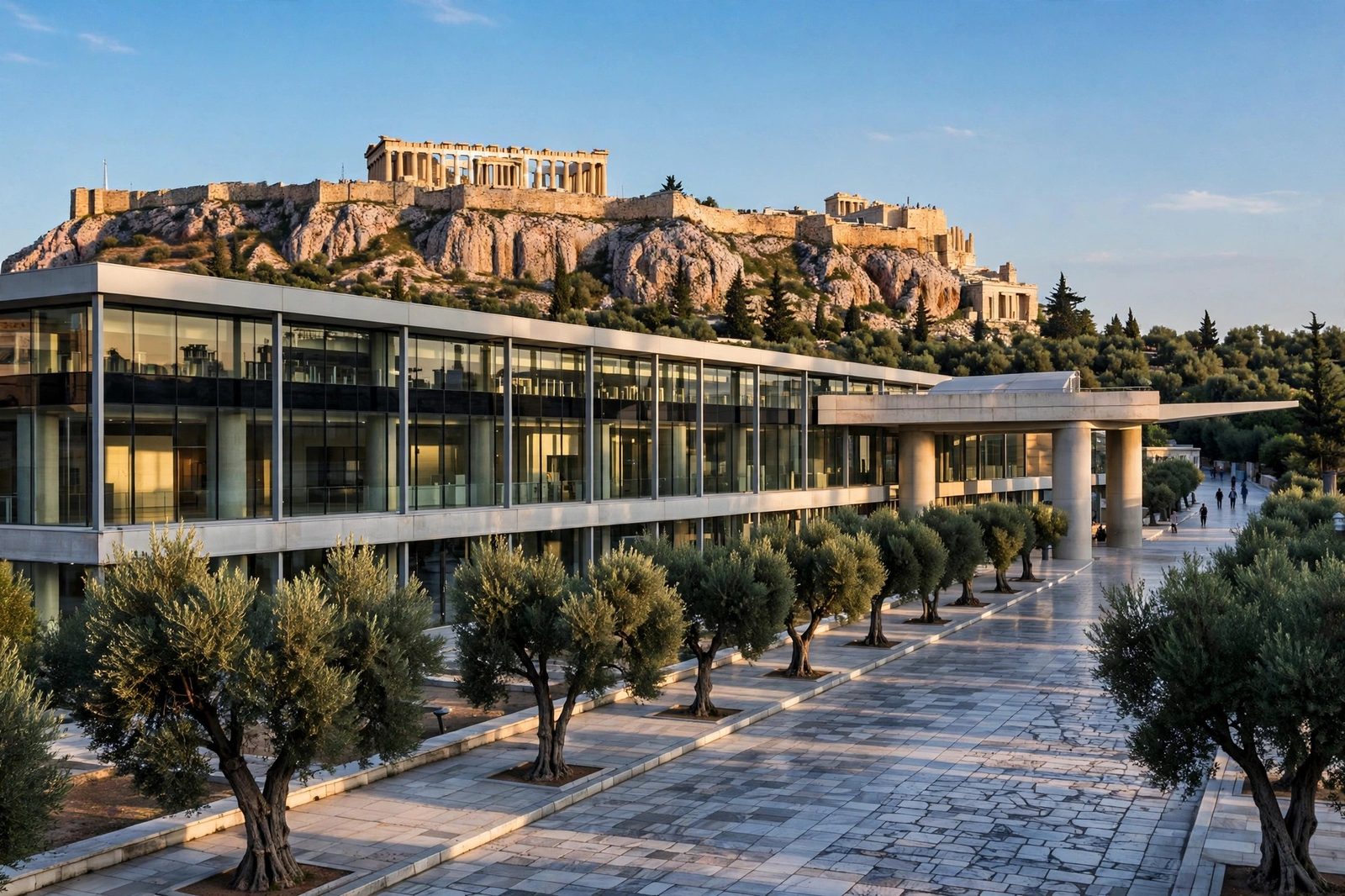
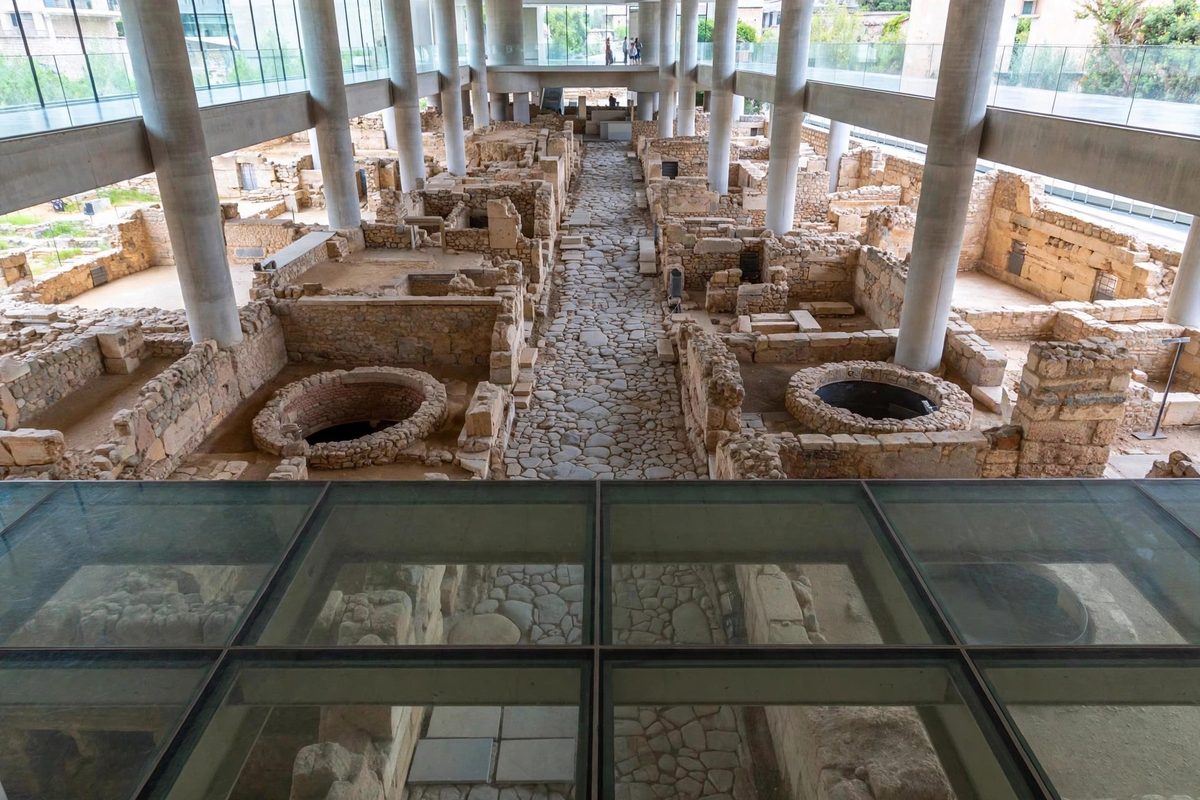
Around 4,000 objects, all found on the rock and its slopes, in daylight, with the Acropolis itself in view through the glass from almost every hall. The building stands on pillars over an excavated ancient neighborhood, so the visit starts with a city under your feet and ends with the Parthenon’s sculptures at eye level.
Designed by Bernard Tschumi with Michael Photiadis, the museum is a long, low building of glass, steel and concrete raised on more than a hundred pillars, because the plot turned out to hold an entire ancient neighborhood and the museum was built over it rather than through it.
Inside, everything is daylight and marble. The displays span the Bronze Age to the early Byzantine centuries.
Five original Caryatids stand here. The sixth is in London, and her absence is part of the display. The same goes upstairs, where carved originals alternate with pale plaster casts for the Parthenon pieces held abroad.
Begin on the ground floor’s sloping Gallery of the Slopes, its glass floor looking down into the dig. Then end the visit below ground in the excavation itself, a grid of streets, houses, workshops and baths lived in for a thousand years.
Korai and kouroi stand in the open here, with no cases between you and the stone. On the same level, the five original Caryatids hold up nothing but air on their balcony, close enough to walk right around.
The top floor is built to the temple’s exact dimensions and turned to its compass bearing, the frieze and metopes running at eye level around a core, and the real Parthenon framed in the glass beyond them.
One of the better museum restaurants anywhere, with a broad terrace staring straight at the rock. It stays open until midnight on Fridays and Saturdays.
The cafe overlooks the excavation and needs no ticket. If you only want the restaurant or the second floor shop, the desk will issue a free pass for them.
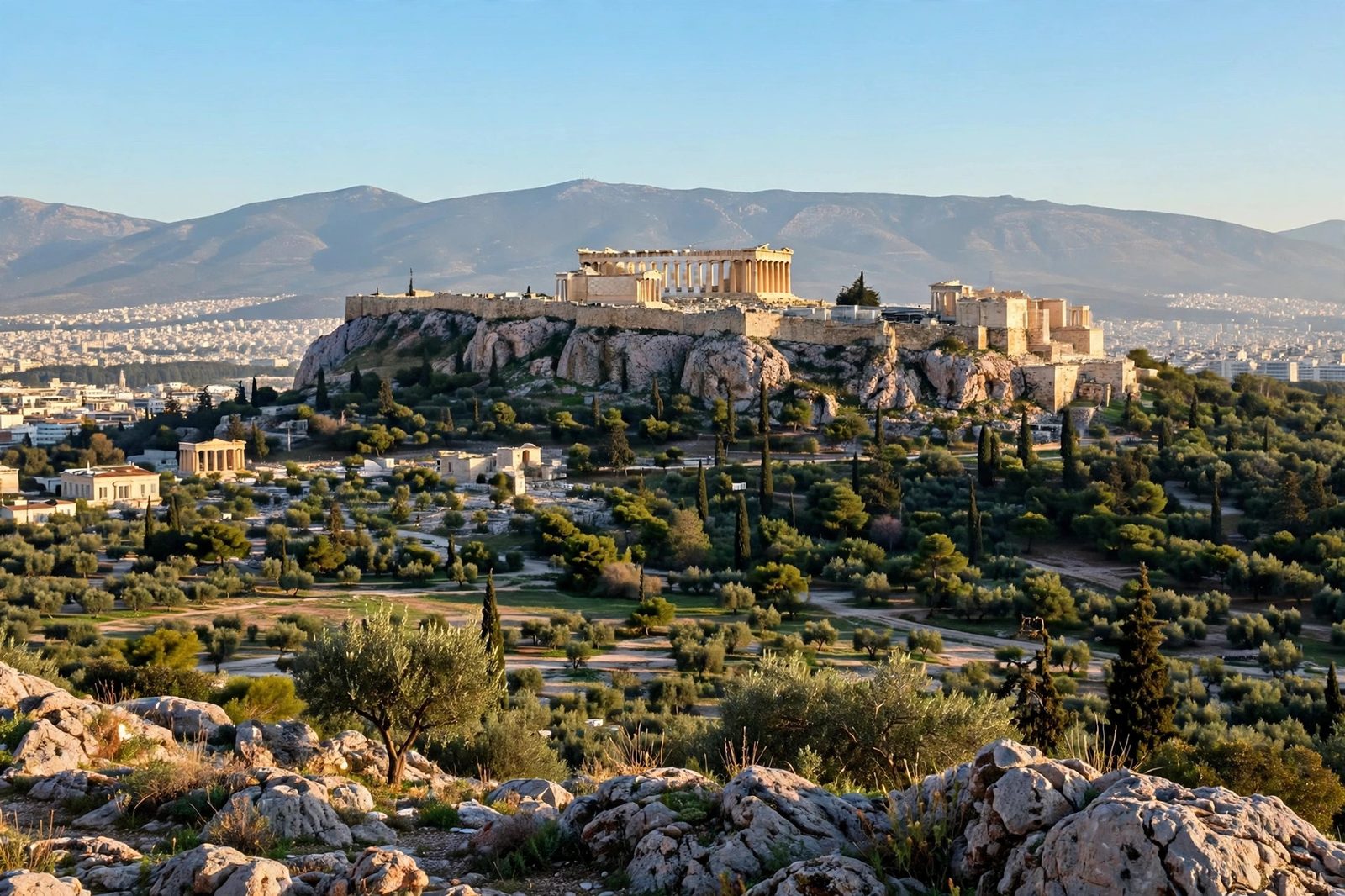 Acropolis of Athens
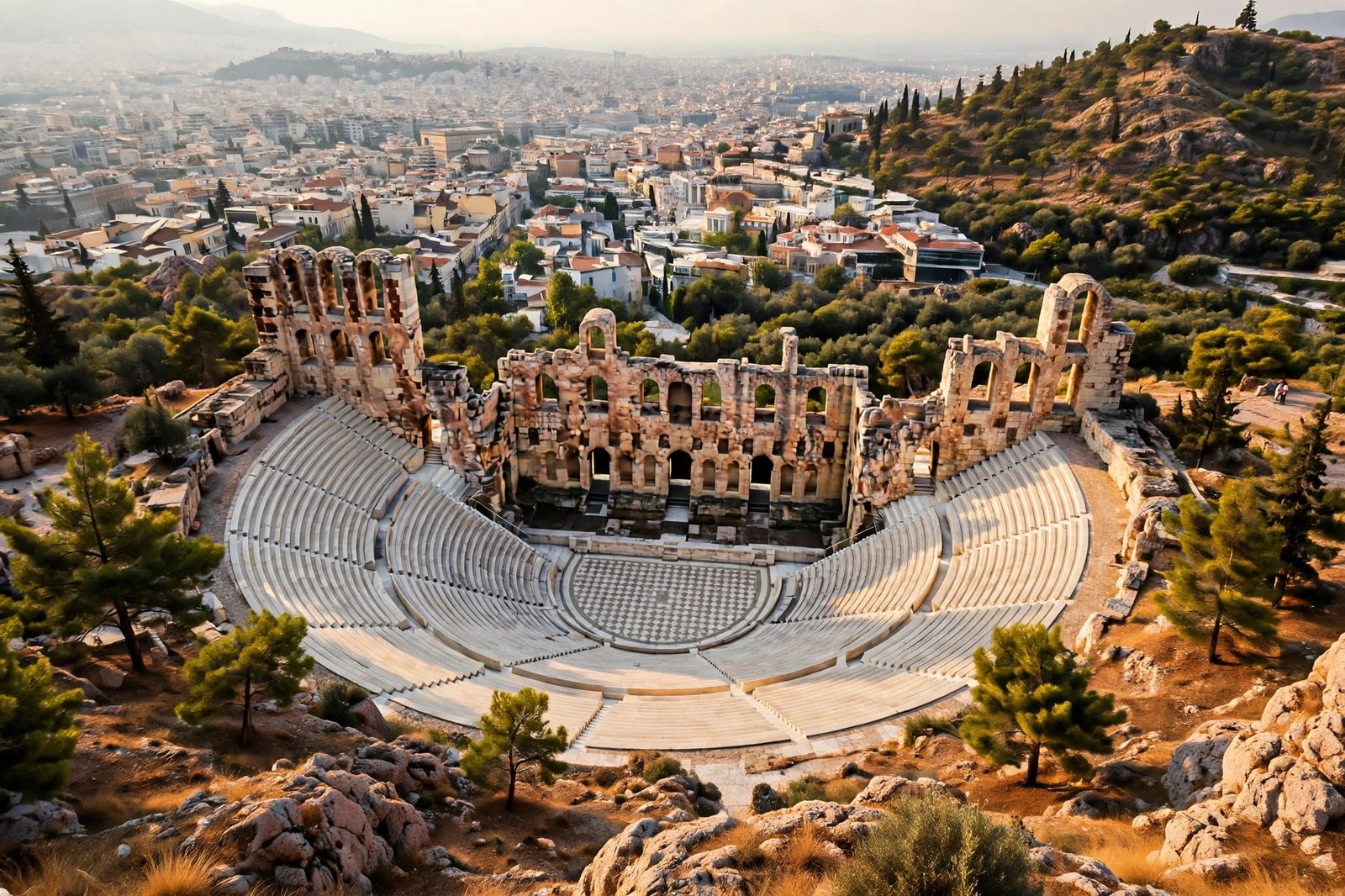 Herod Atticus Odeon
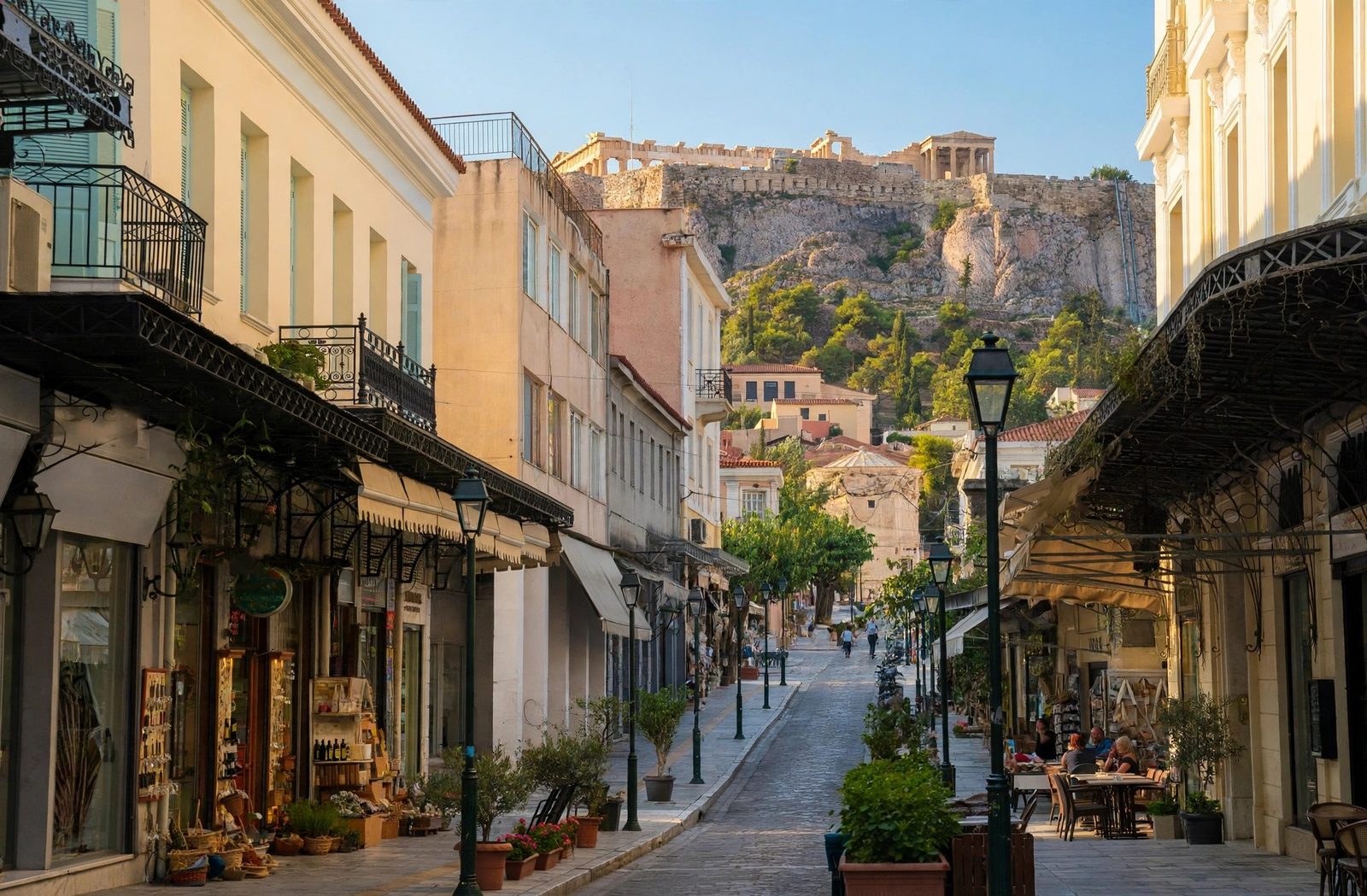 Plaka
This demo page rearranges the Zaila library page for Acropolis Museum into short parts, with the key facts up top and each photo placed next to the words it belongs with. The detail is still here, including the story and the practical notes. Use the breadcrumb at the top, the links in the text, and the nearby places above to browse out of this page and back in again.