
Loading
Loading
This demo is private. Sign in with the Google account it was shared with.
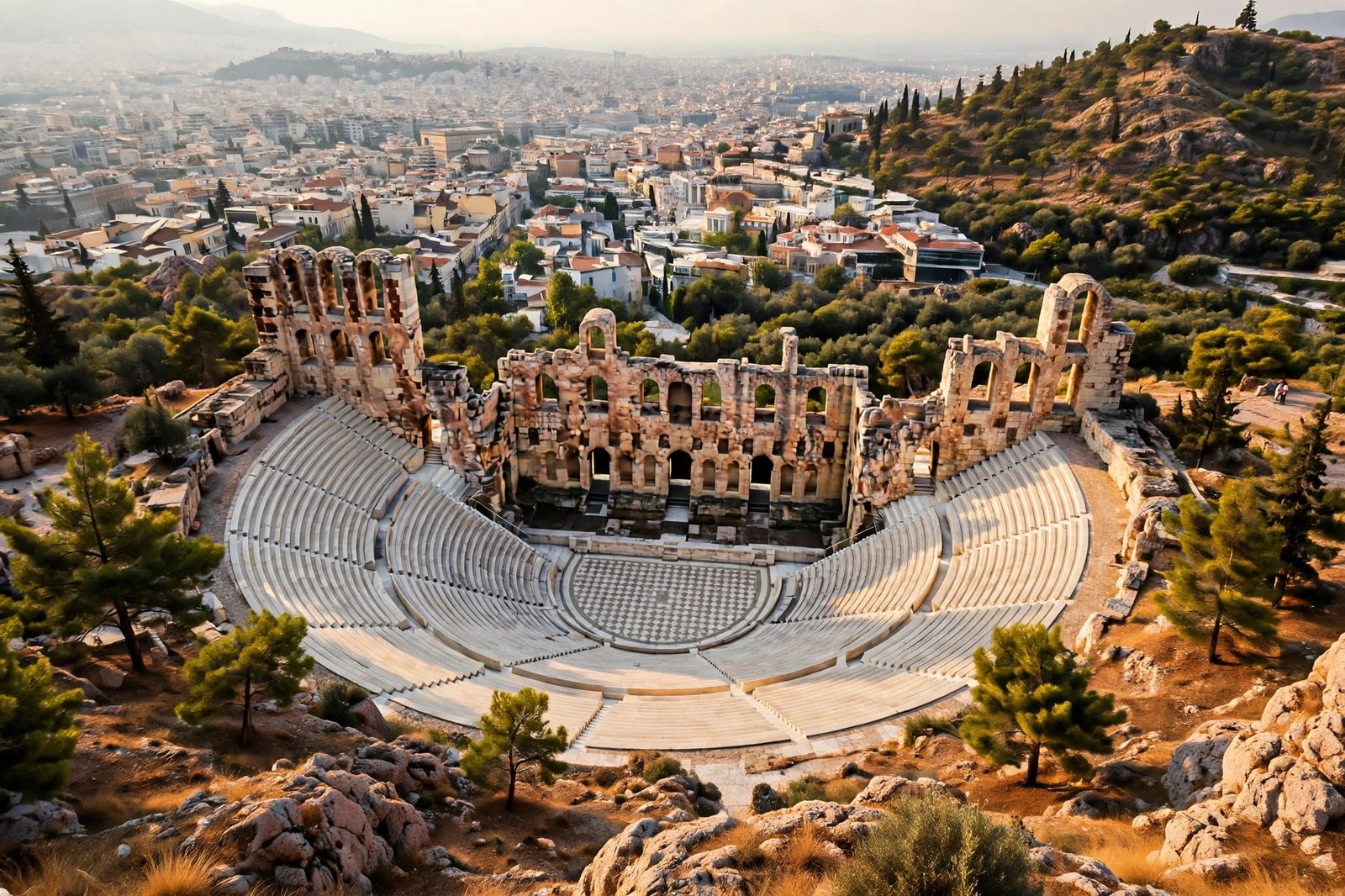
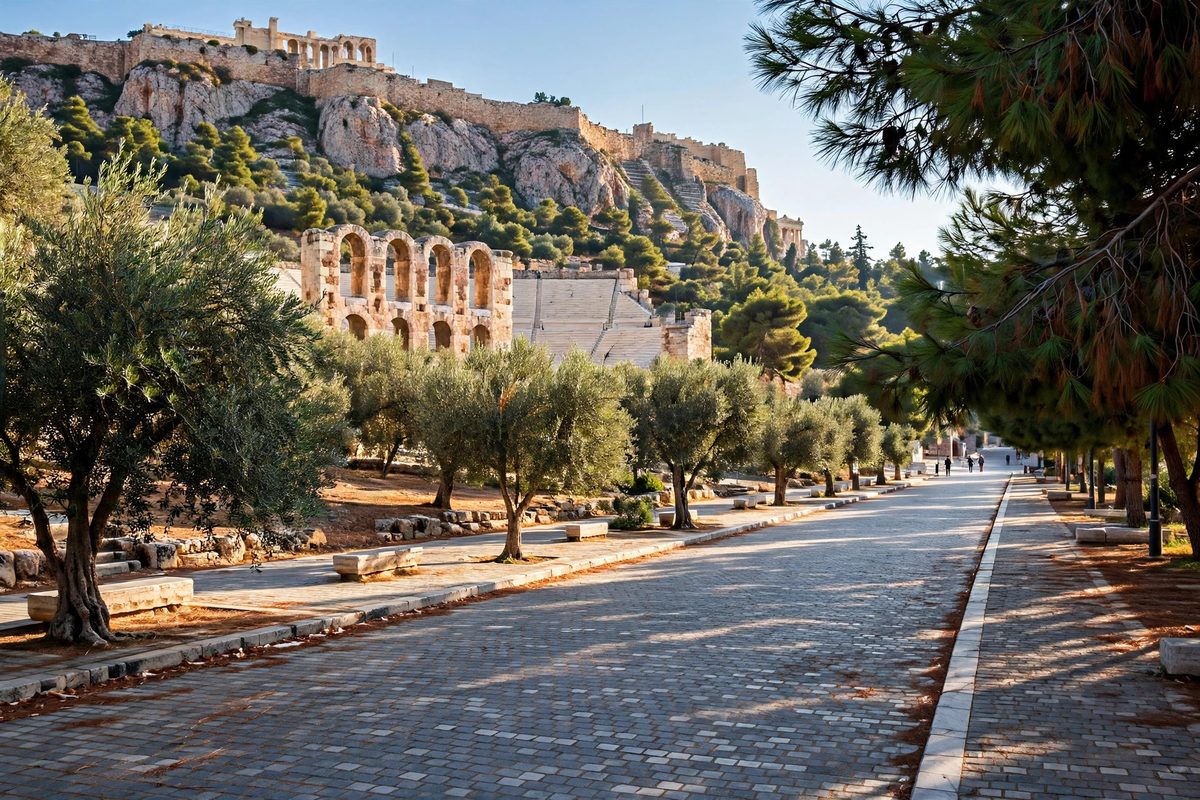
A marble theatre from the age of Roman Athens, carved into the foot of the Acropolis and still filled with music on summer nights.
TripAdvisor page · Google Maps
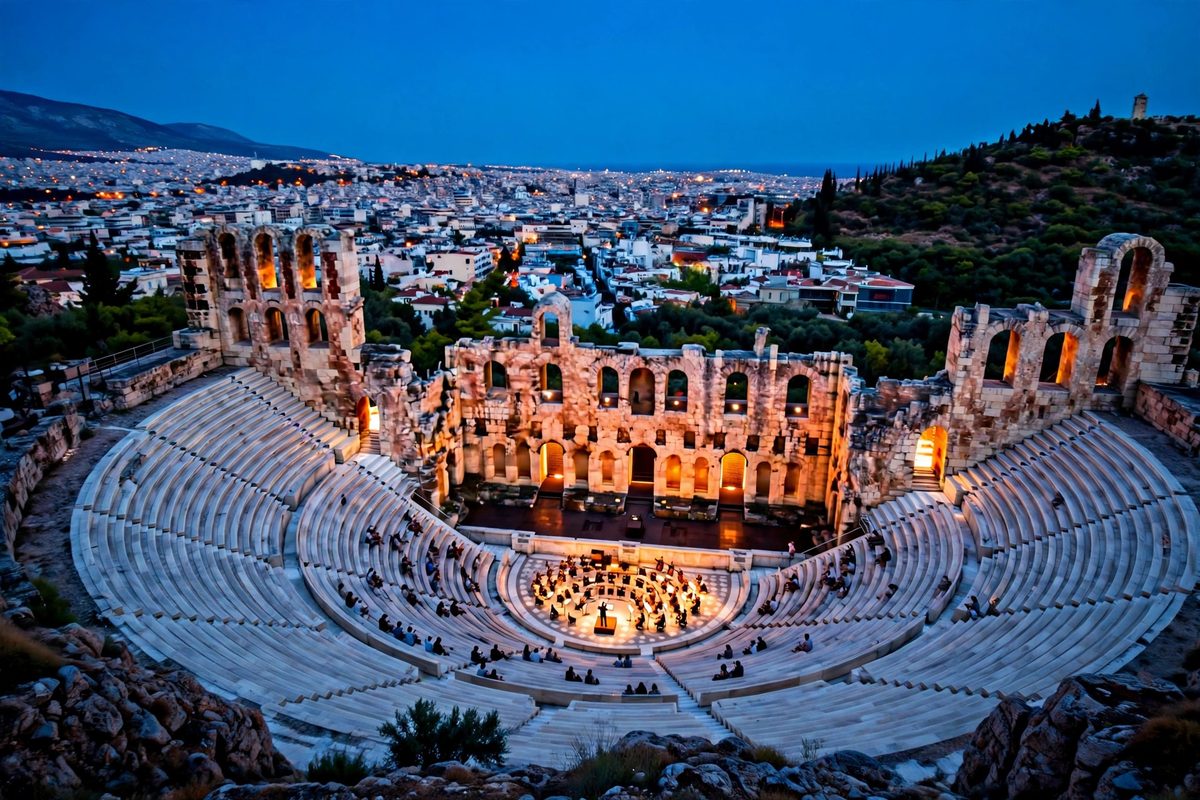
It feels less like a ruin than a working theatre that happens to be nearly 2,000 years old. Built around AD 161 and restored in the 1950s, it still hosts concerts, opera, ballet and ancient drama under the open sky, with the floodlit Acropolis rising behind the top rows.
On the southwest slope of the Acropolis, the Odeon curves into the hillside in a great semicircle of pale marble seating. It ranked among the grandest performance buildings of its day.
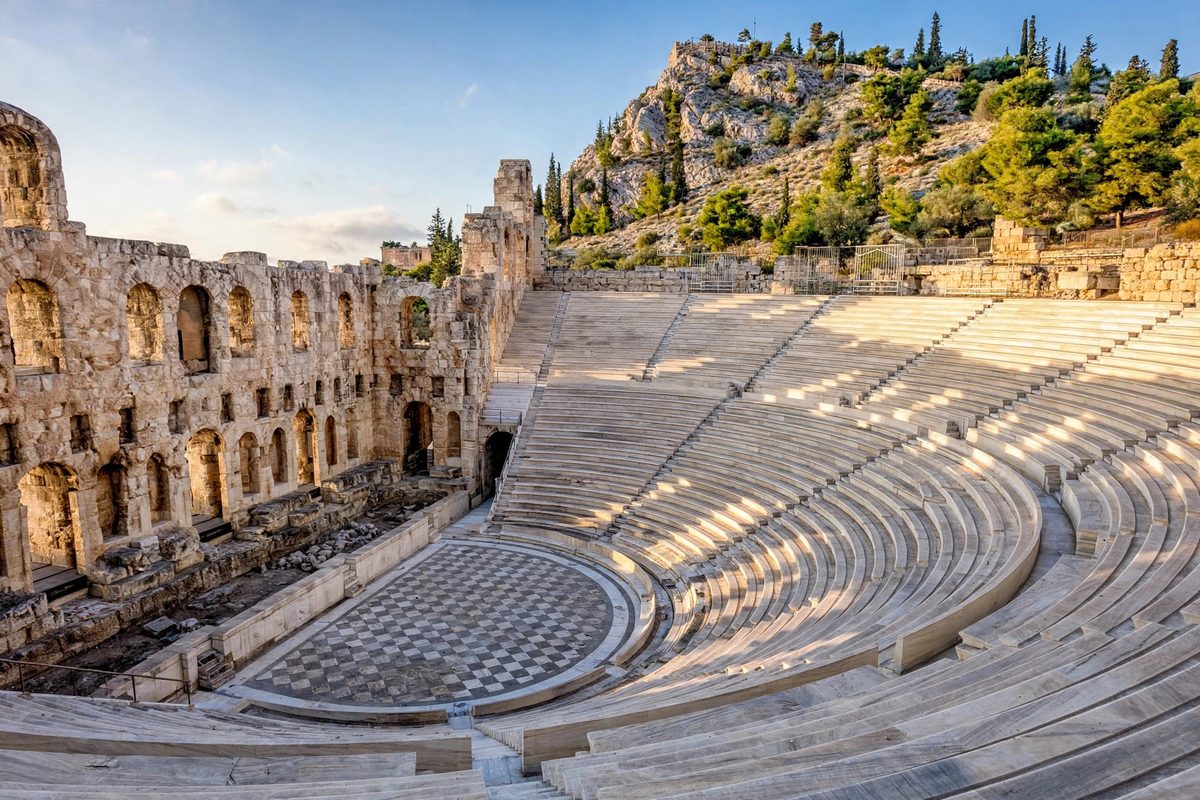
The cedar wood roof that once covered the audience is long gone, so the theatre sits open to the Attic sky. That openness is much of its character now: stone, sky and the city beyond.
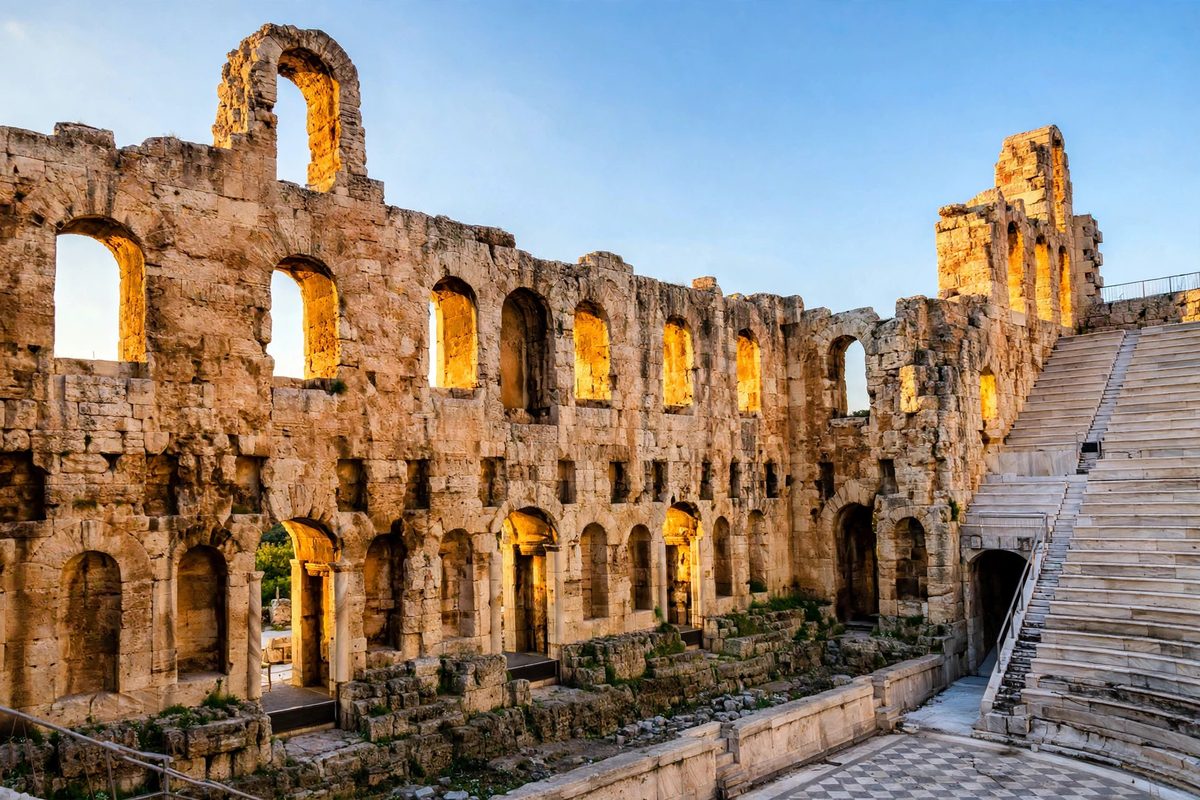
Herodes Atticus, a wealthy Athenian of the Roman era, built the theatre around AD 161 in memory of his wife Regilla. Behind the stage stands a three-storey facade of stone arches, and the whole building held about 5,000 spectators.
Most people first take in the Odeon from above, looking down into the seating bowl from the Acropolis. From there the whole shape makes sense at once: the curve of the seats, the checkered stage floor and the tall wall behind it.
Then see it the other way, looking up at the arched facade from Dionysiou Areopagitou, the broad pedestrian street that runs along the foot of the hill. The Odeon sits between the street and the Acropolis rock above.
The real prize is a seat inside. Through the summer the Odeon is the flagship venue of the Athens Epidaurus Festival, hosting orchestral concerts, opera, ballet and ancient drama under the open sky. Performances start after dark, when the marble has cooled and the stone gives back the music with a clarity modern halls envy.
If no performance fits your dates, the view from the street and the slope still gives the full measure of the place.
The theatre was destroyed in the third century and left in ruins for centuries. In the 1950s it was restored with freshly cut marble seating, which is why the bowl looks so clean and complete today next to the weathered stage wall.
The original building was roofed in cedar wood, a remarkable span for its time. Nothing of it survives. What you see now is the stone skeleton: seats, stage and that tall arched wall, all open air.
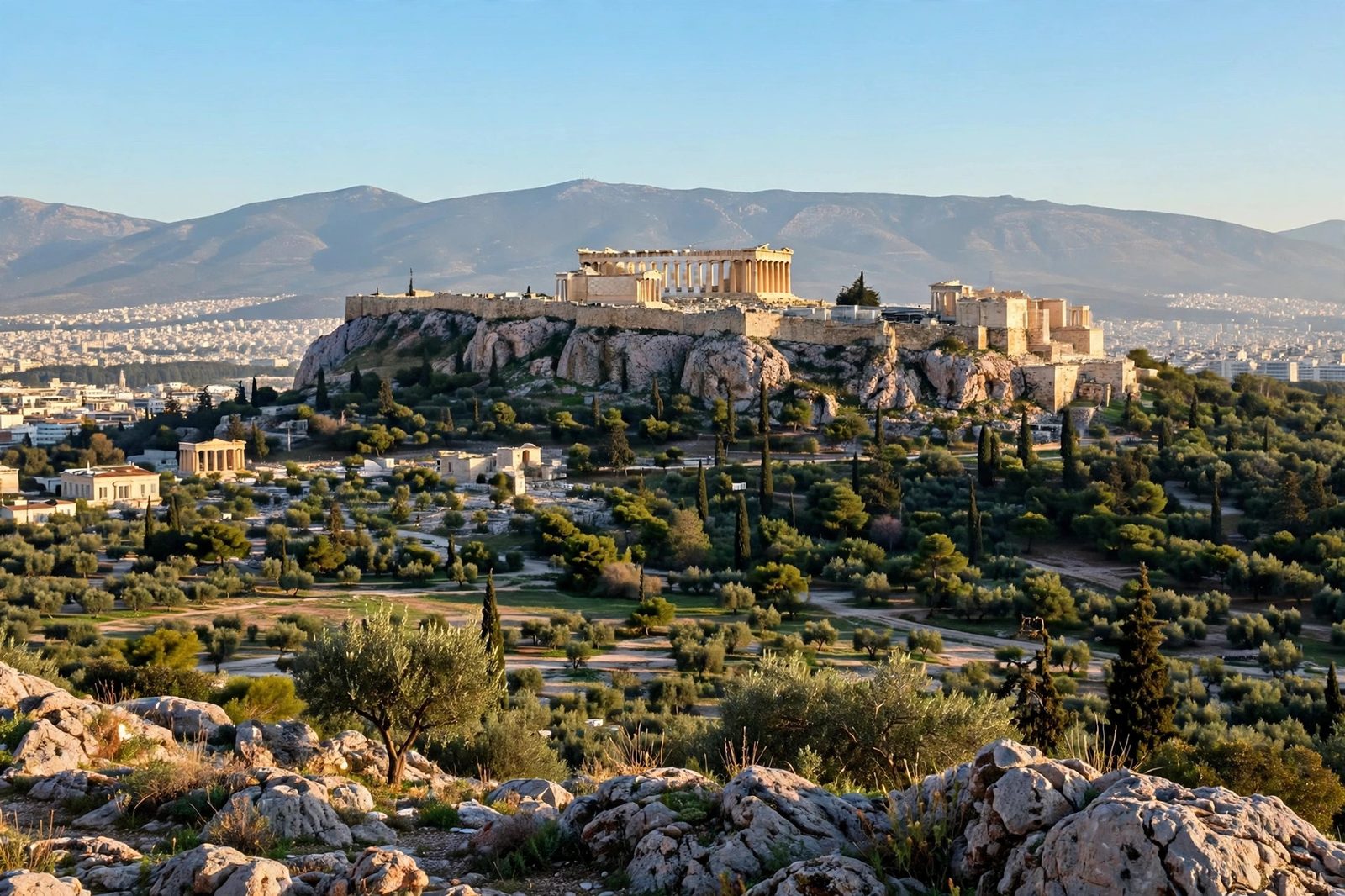 Acropolis of Athens
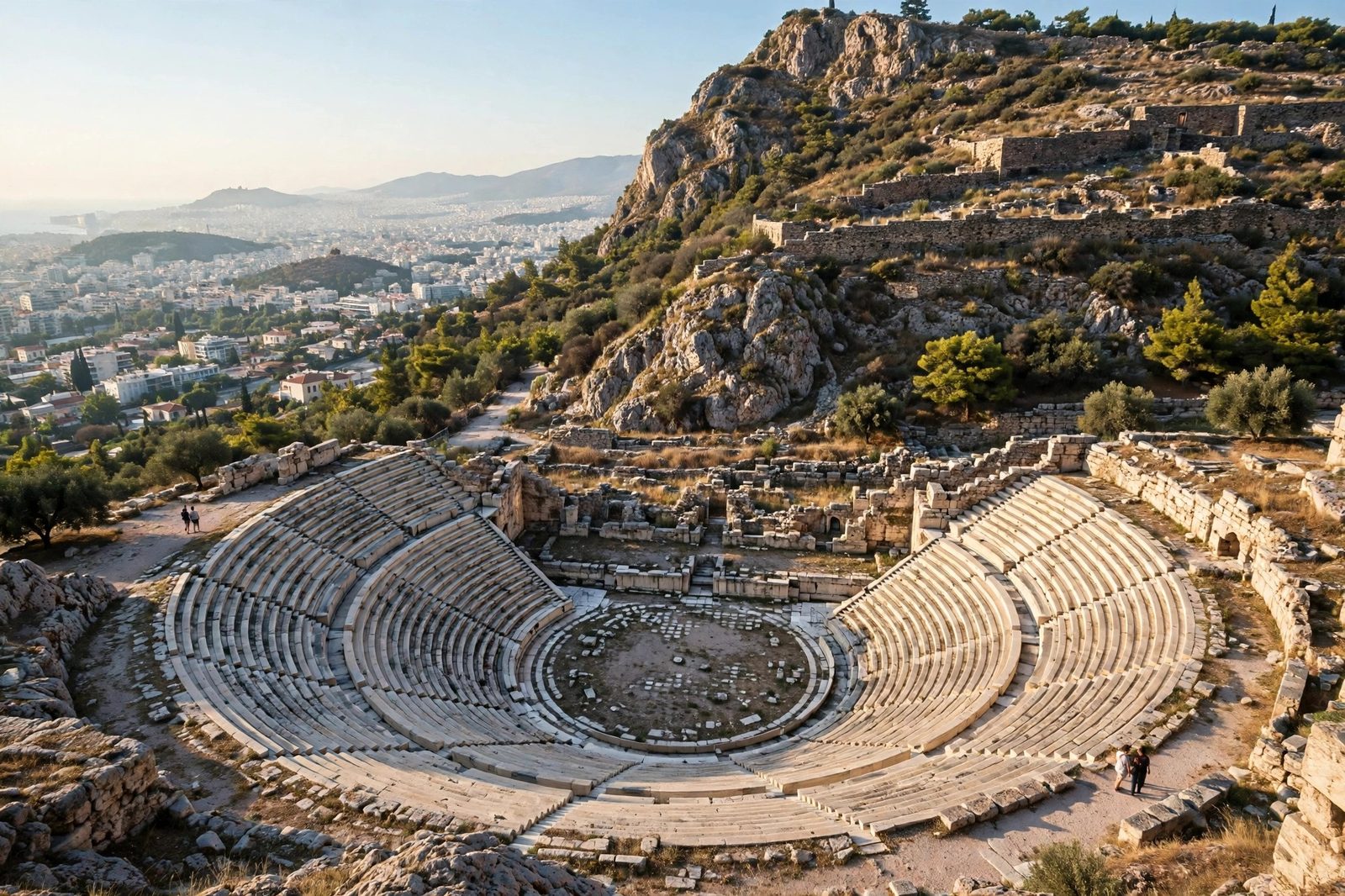 Theatre of Dionysus
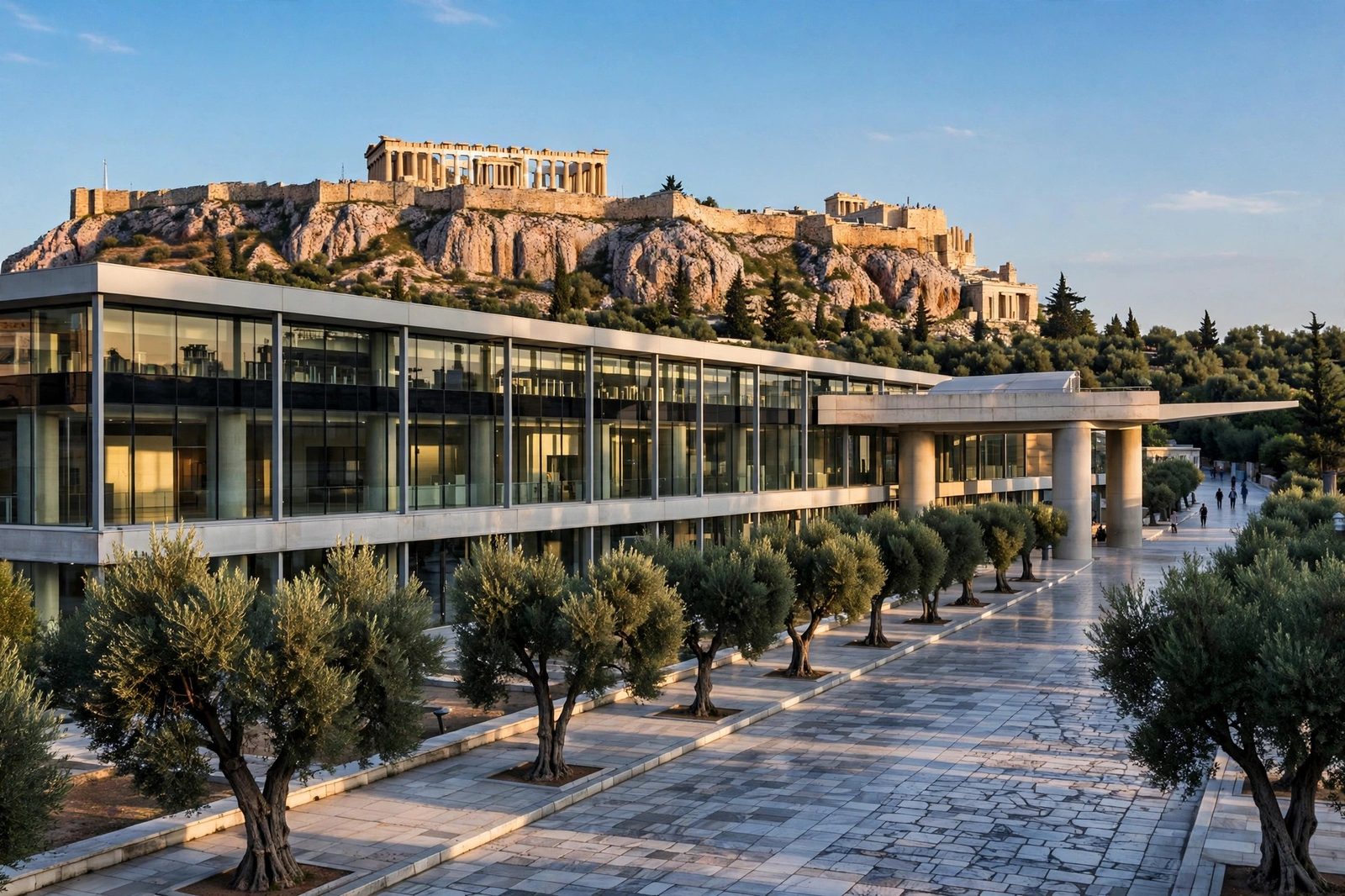 Acropolis Museum
This demo page rearranges the Zaila library page for Herod Atticus Odeon into short parts, with the key facts up top and each photo placed next to the words it belongs with. The detail is still here, including the story and the practical notes. Use the breadcrumb at the top, the links in the text, and the nearby places above to browse out of this page and back in again.