
Loading
Loading
This demo is private. Sign in with the Google account it was shared with.
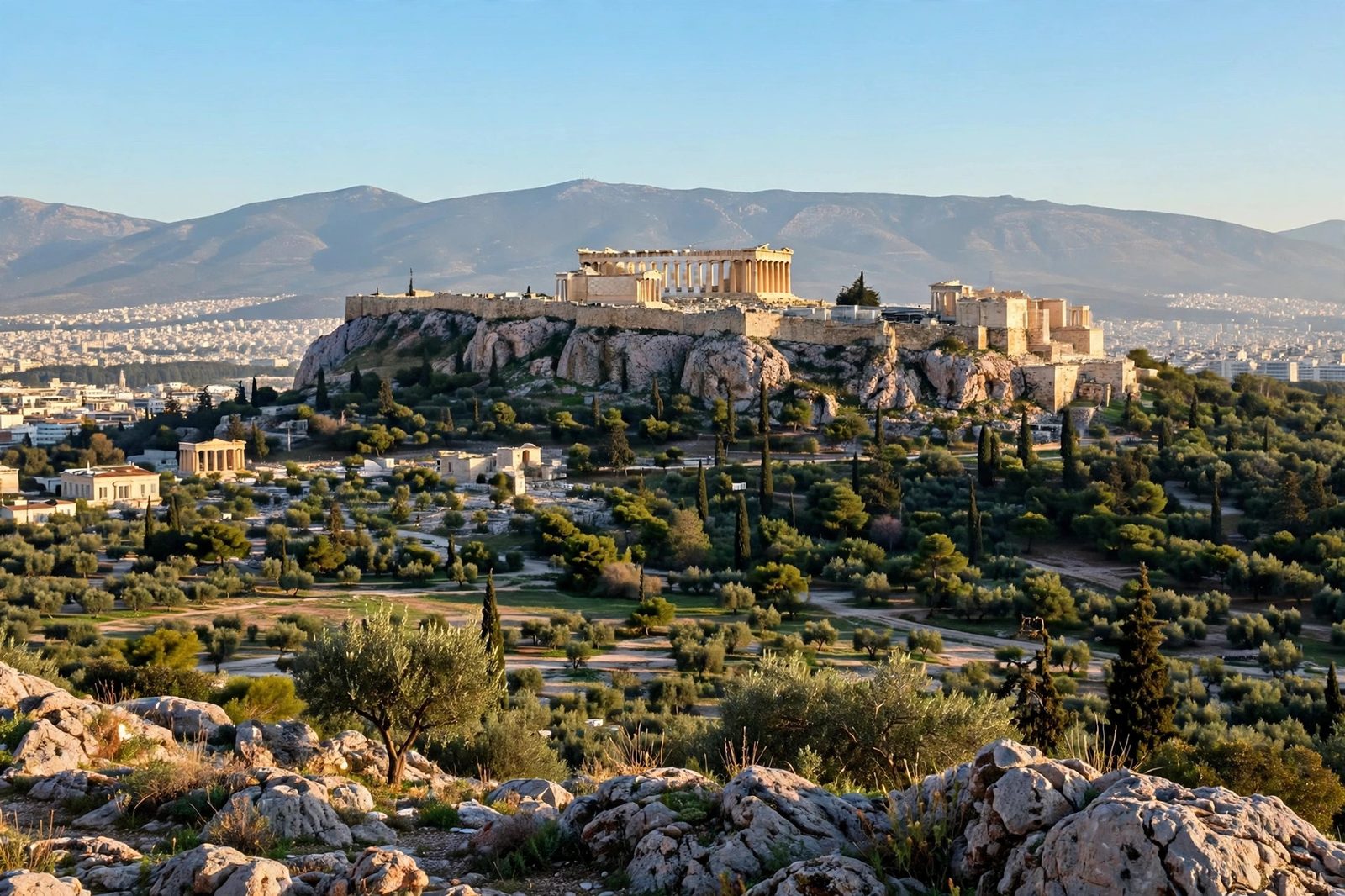
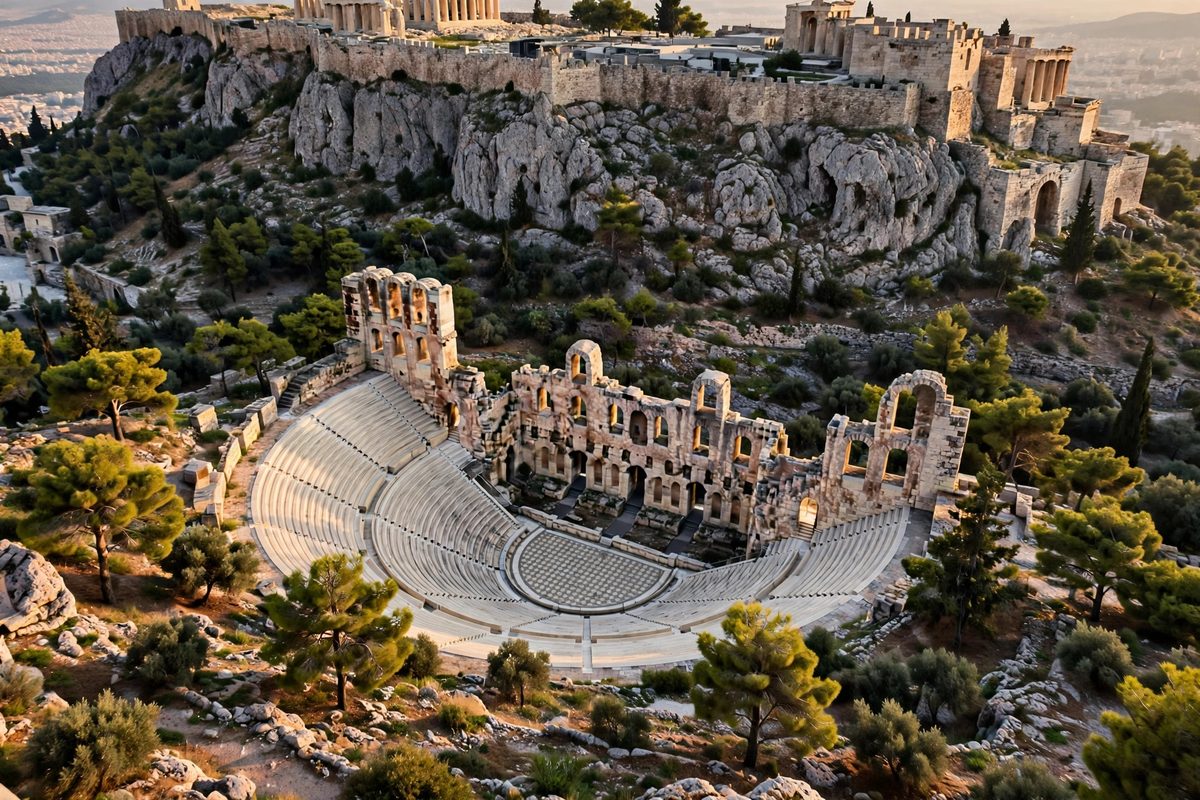
The flat topped rock at the centre of Athens, crowned by the Parthenon and 2,500 years of building in pale marble.
This is the one sight in Athens everything else arranges itself around. A limestone rock about 150 metres above the sea, worshipped on for thousands of years, and rebuilt in one extraordinary burst of building in the 5th century BC. Stark, open and unforgettable: bare rock, white marble, and the whole modern city spread out below.
The buildings visible today belong mostly to a single generation. After the Greek victory over Persia, under the statesman Pericles, with the sculptor Phidias overseeing the art, Athens rebuilt its ruined temples in pale Pentelic marble.
The feeling on top is stark and open. There is very little shade and almost nothing between you and the stone, the sky and the view.
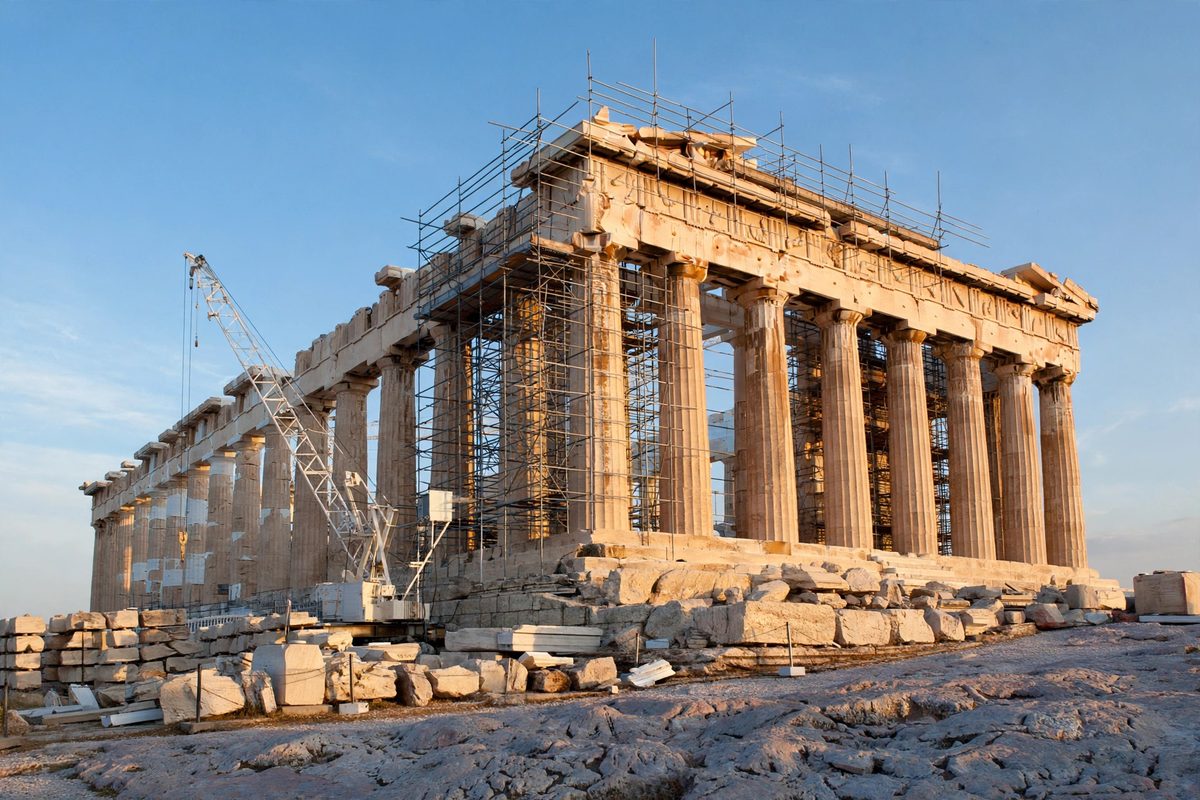
The Parthenon is full of lines that curve or lean slightly to correct optical illusions, so the temple reads as straight and calm to the eye. Walking its full circuit on the bare rock is the way to take that in. The interior is closed.
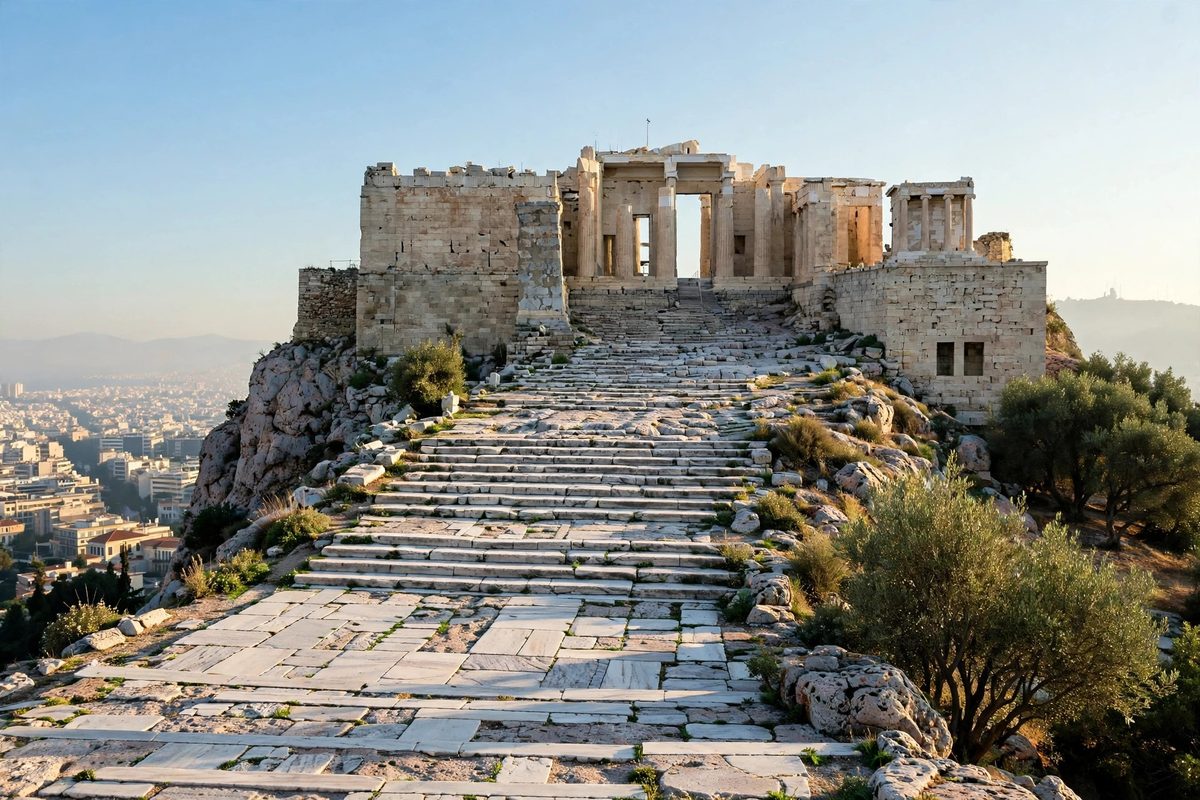
Come in at the west end, as ancient processions did, through the Propylaea, the monumental gateway begun in 437 BC. Pause at the small Temple of Athena Nike on the bastion to your right.
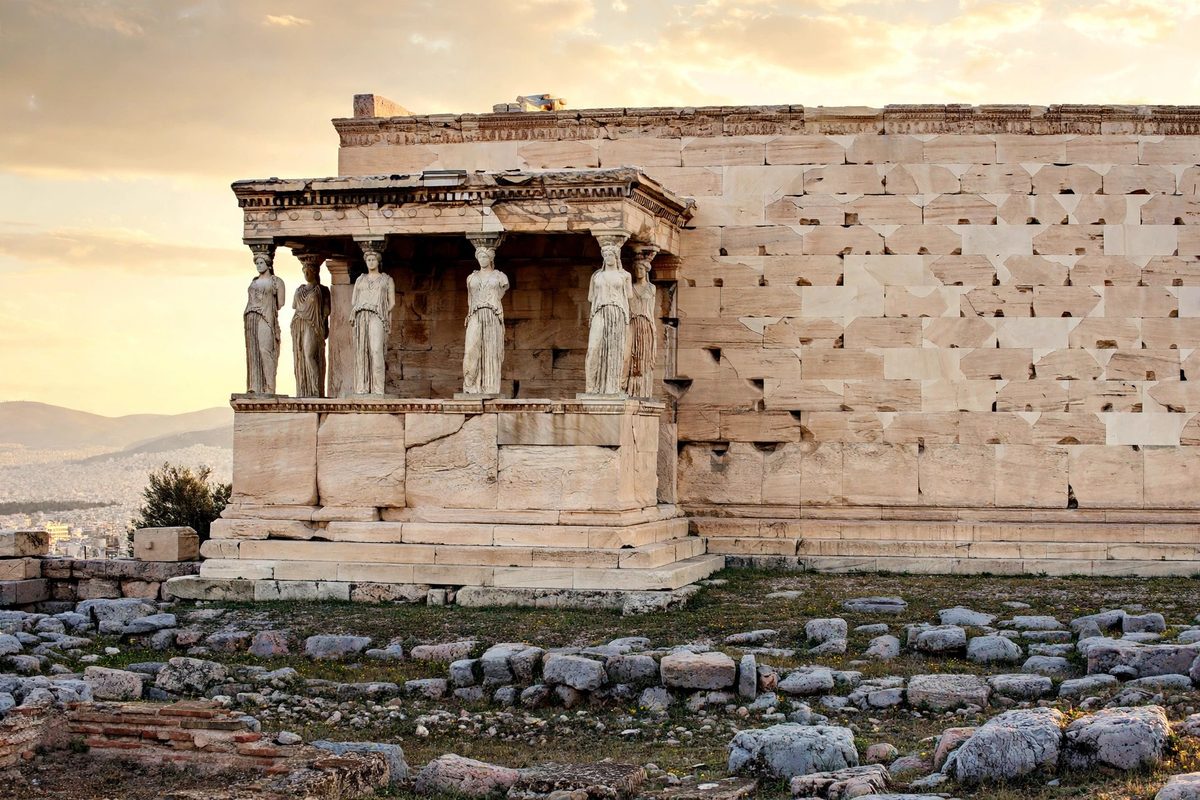
On the north side stands the Erechtheion, whose famous porch is held up by six Caryatids. The figures on site are copies. Five of the originals are in the Acropolis Museum, a short walk below.
Below the summit, the south slope holds the Theatre of Dionysus and the Herod Atticus Odeon. End at the flagpole at the east end for the view to Mount Lycabettus and down to the sea.
Nothing is sold on the rock itself, so have a coffee before you climb, in the streets below the south entrance around Makrigianni and Koukaki, and save lunch for afterwards.
The lanes of Plaka, under the north and east slopes, are full of tavernas, and the Acropolis Museum has a restaurant with a terrace looking straight back up at the Parthenon.
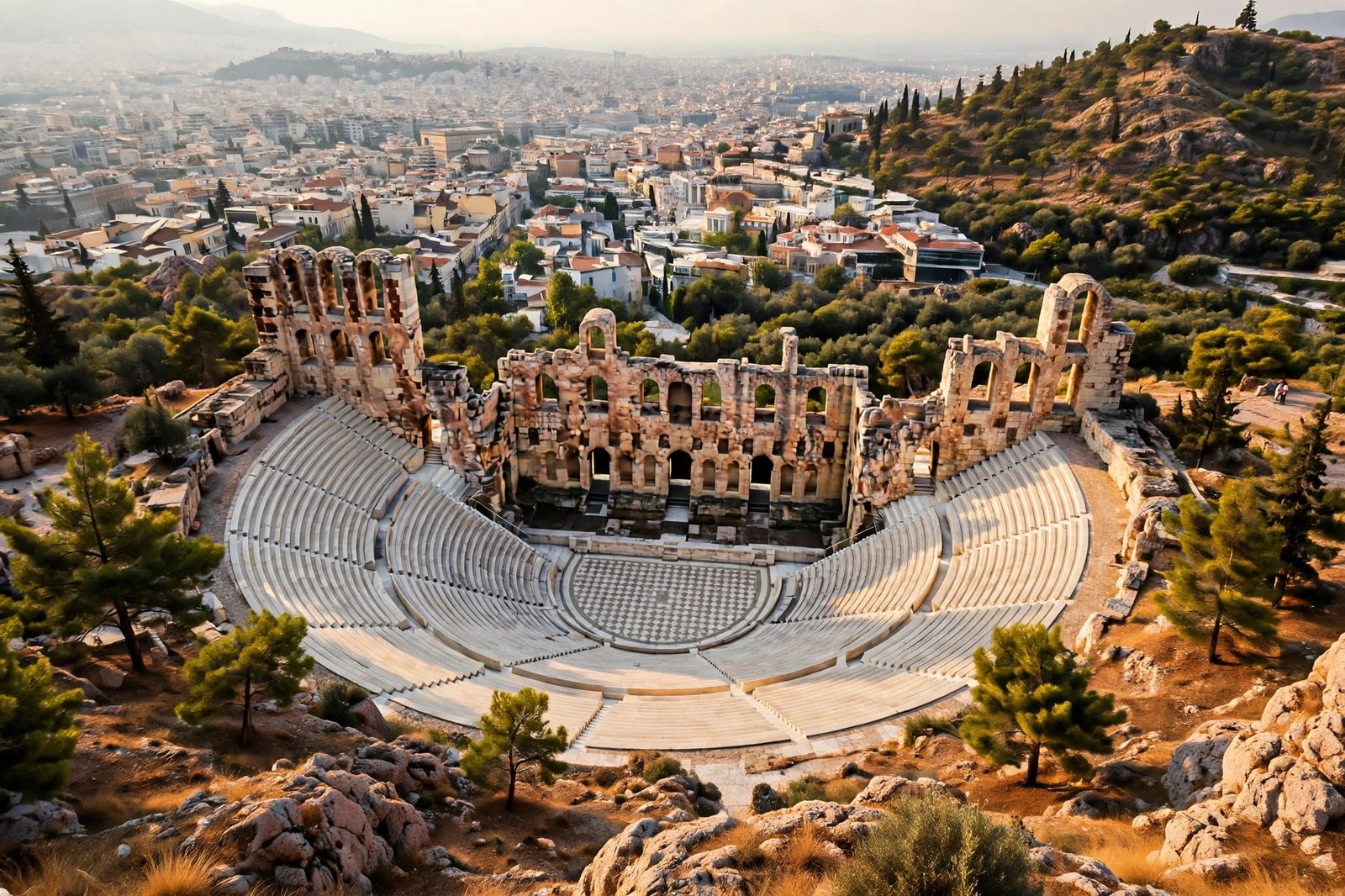 Herod Atticus Odeon
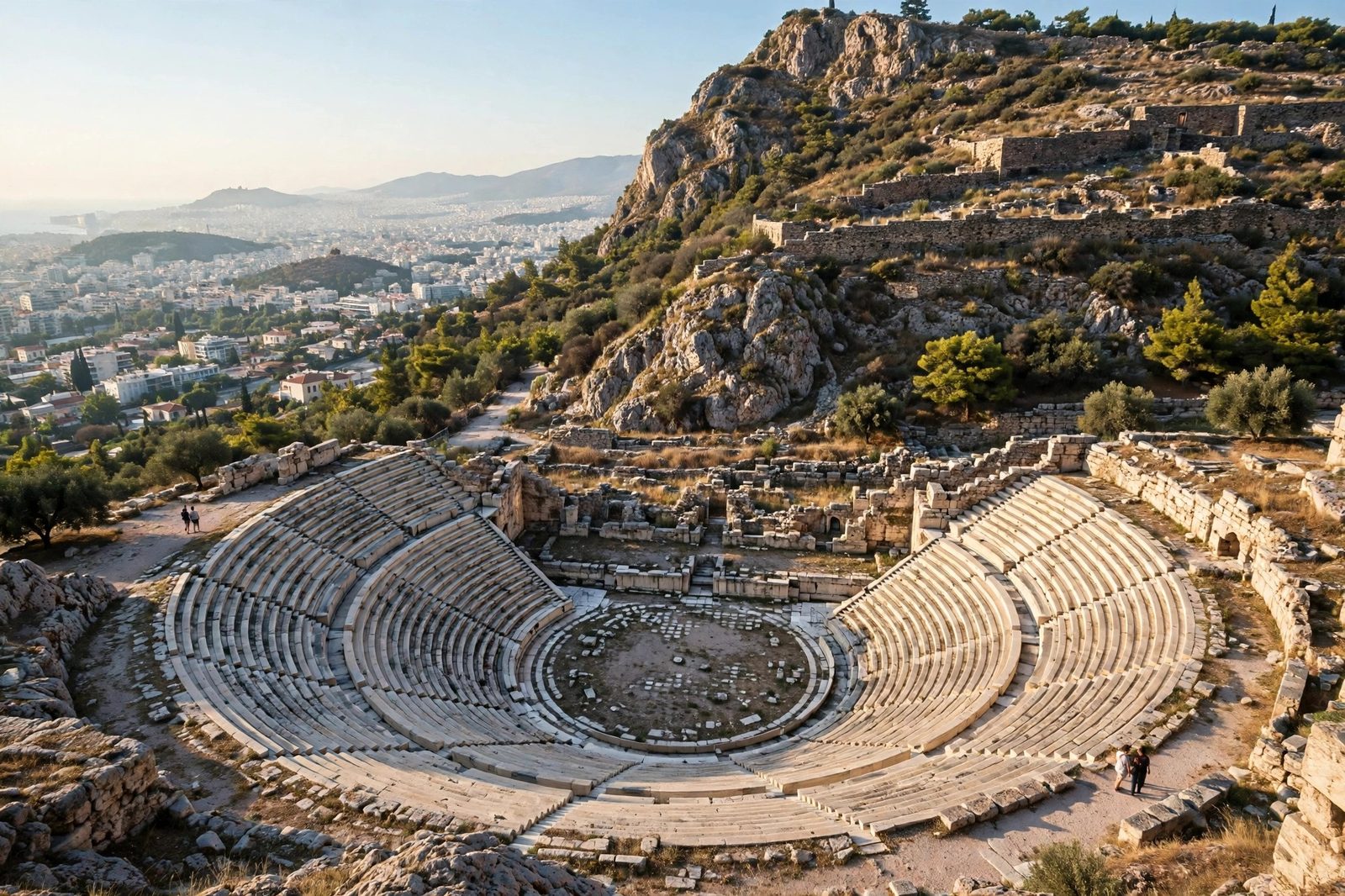 Theatre of Dionysus
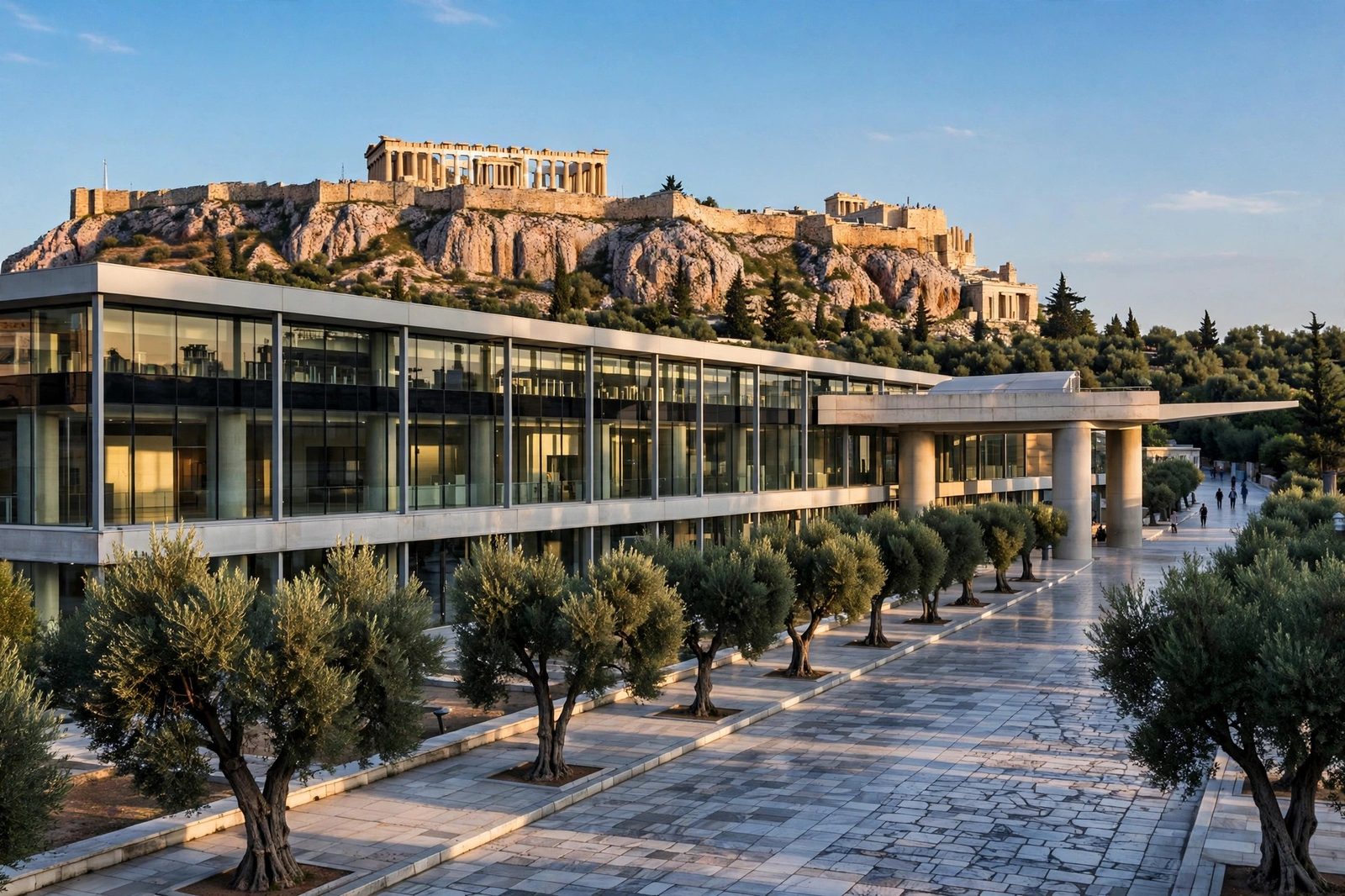 Acropolis Museum
This demo page rearranges the Zaila library page for Acropolis of Athens into short parts, with the key facts up top and each photo placed next to the words it belongs with. The detail is still here, including the story and the practical notes. Use the breadcrumb at the top, the links in the text, and the nearby places above to browse out of this page and back in again.