
Loading
Loading
This demo is private. Sign in with the Google account it was shared with.
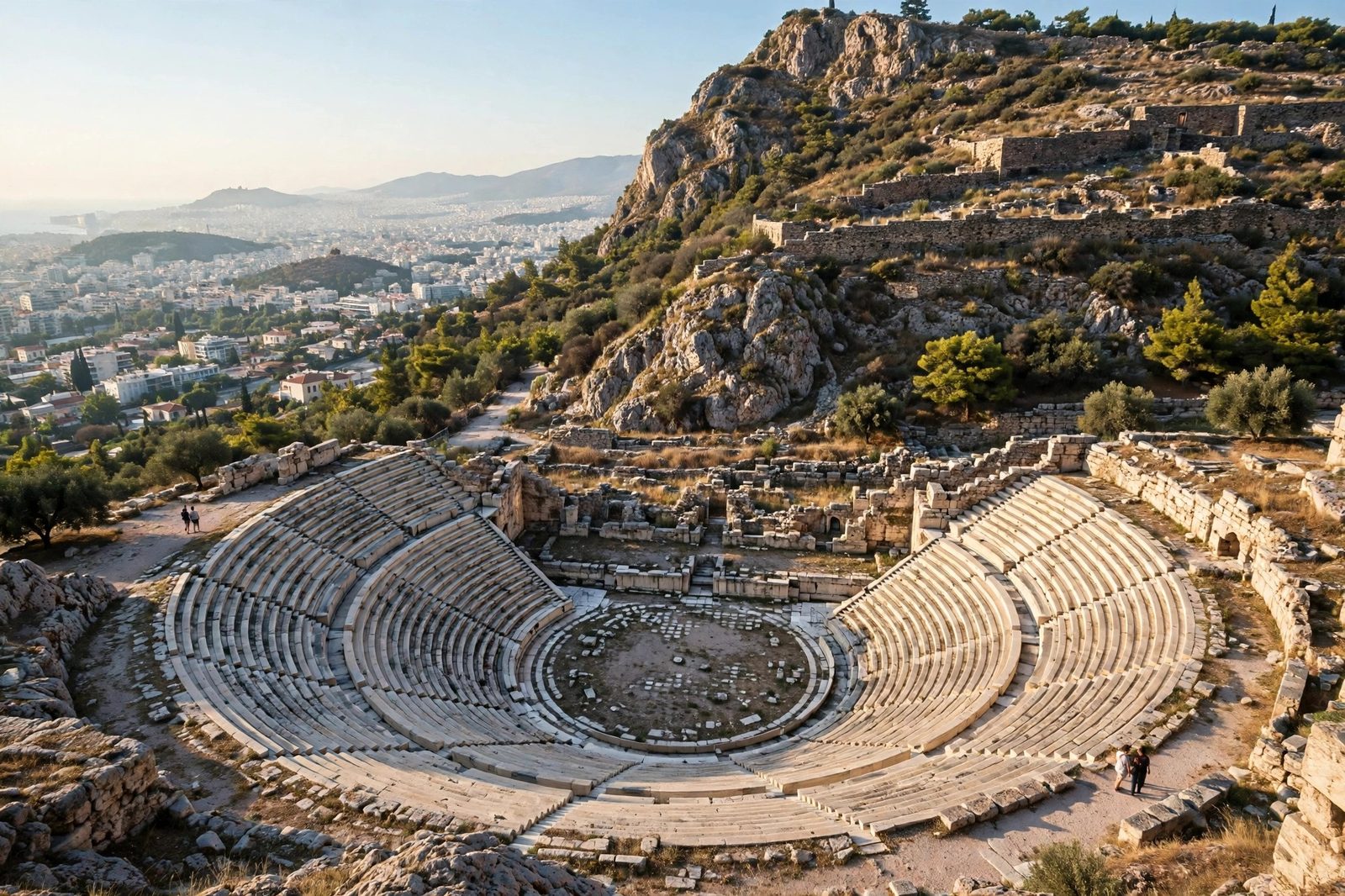
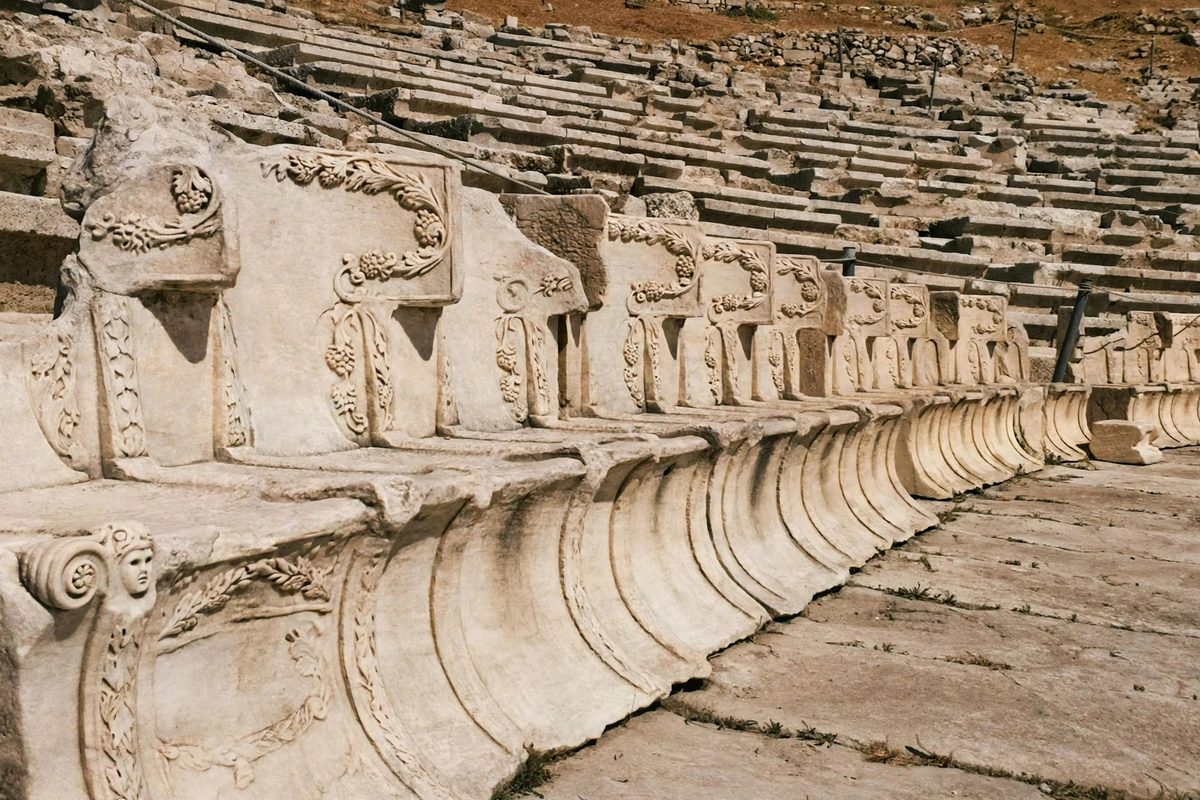
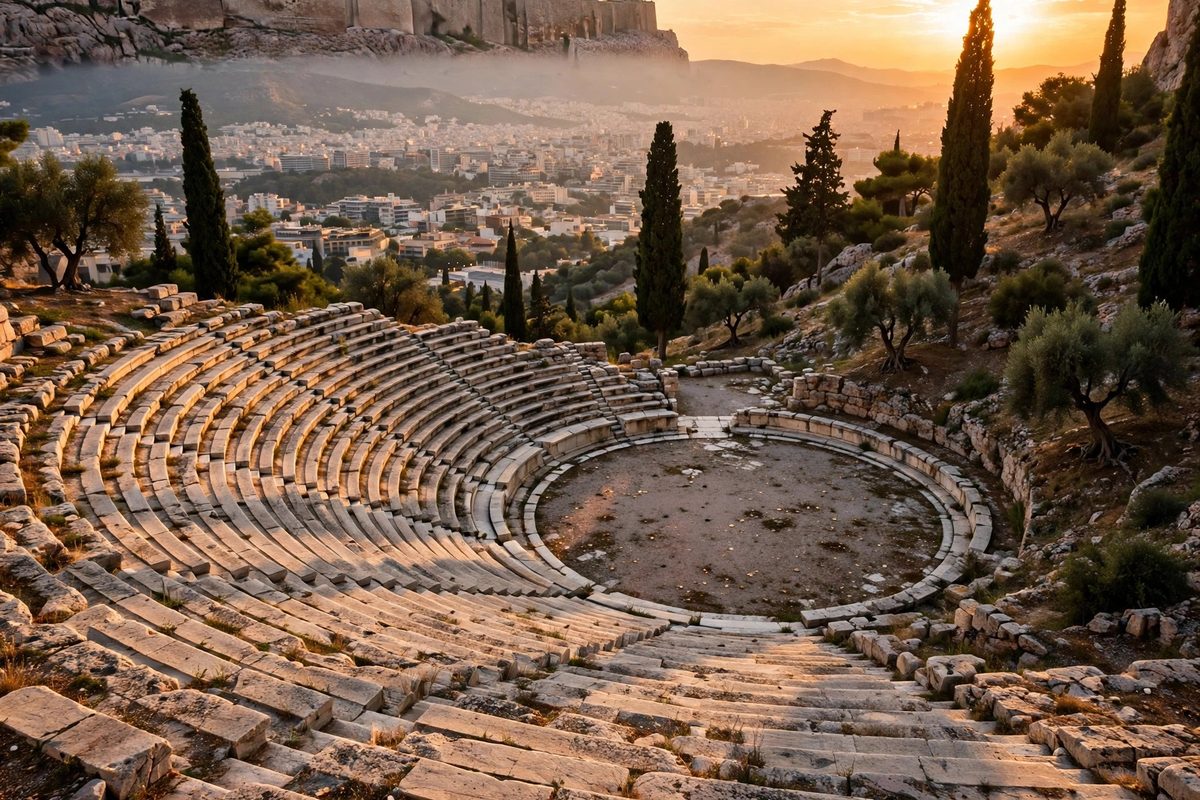
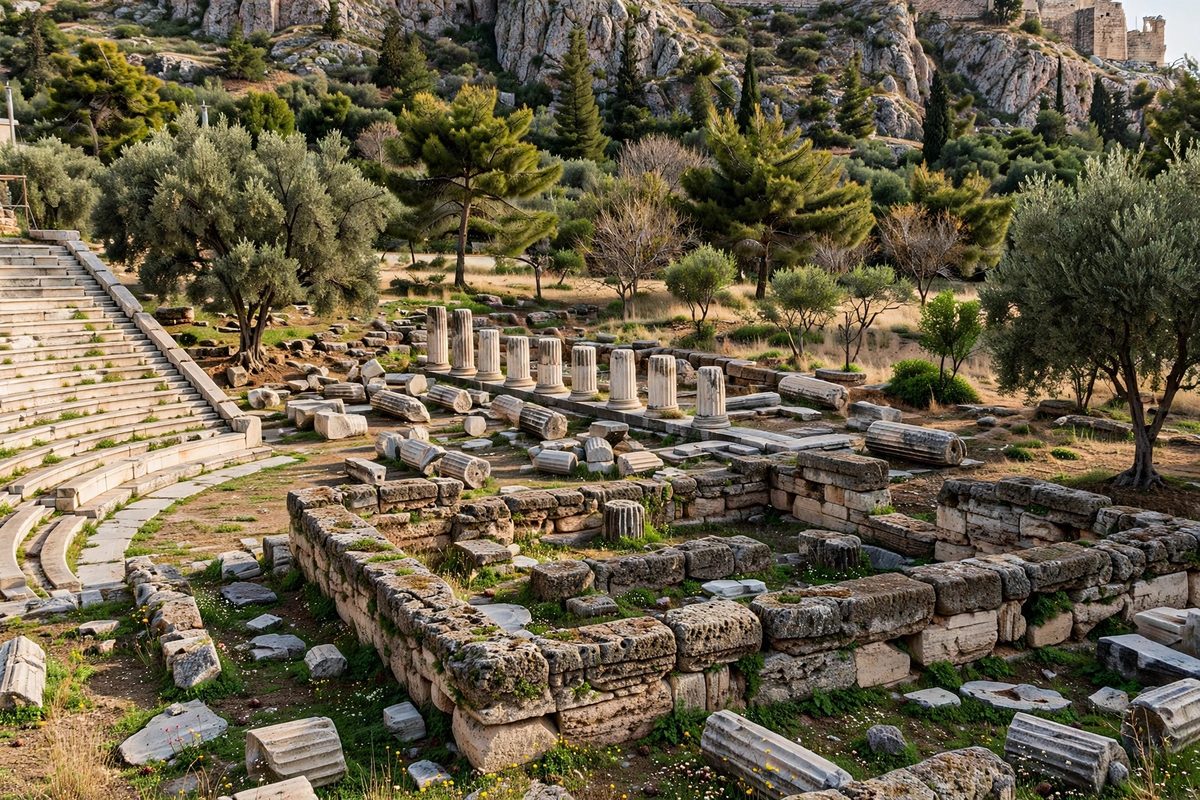
Every stage play since traces back to this hillside: the great stone bowl under the Acropolis where Athens invented theatre, its priests’ carved marble thrones still lining the front row.
TripAdvisor page · Google Maps
The tragedies of Aeschylus, Sophocles and Euripides and the comedies of Aristophanes all had their first performances here. It survives as an honest ruin, far quieter than the hilltop, and with the seats empty it still feels like what it was: a place built to hold a whole city’s attention for a day at a time.
Cut into the south slope of the Acropolis, the theatre is a vast open semicircle of tiered stone seats wrapped around a circular orchestra, looking out over the streets of modern Athens.
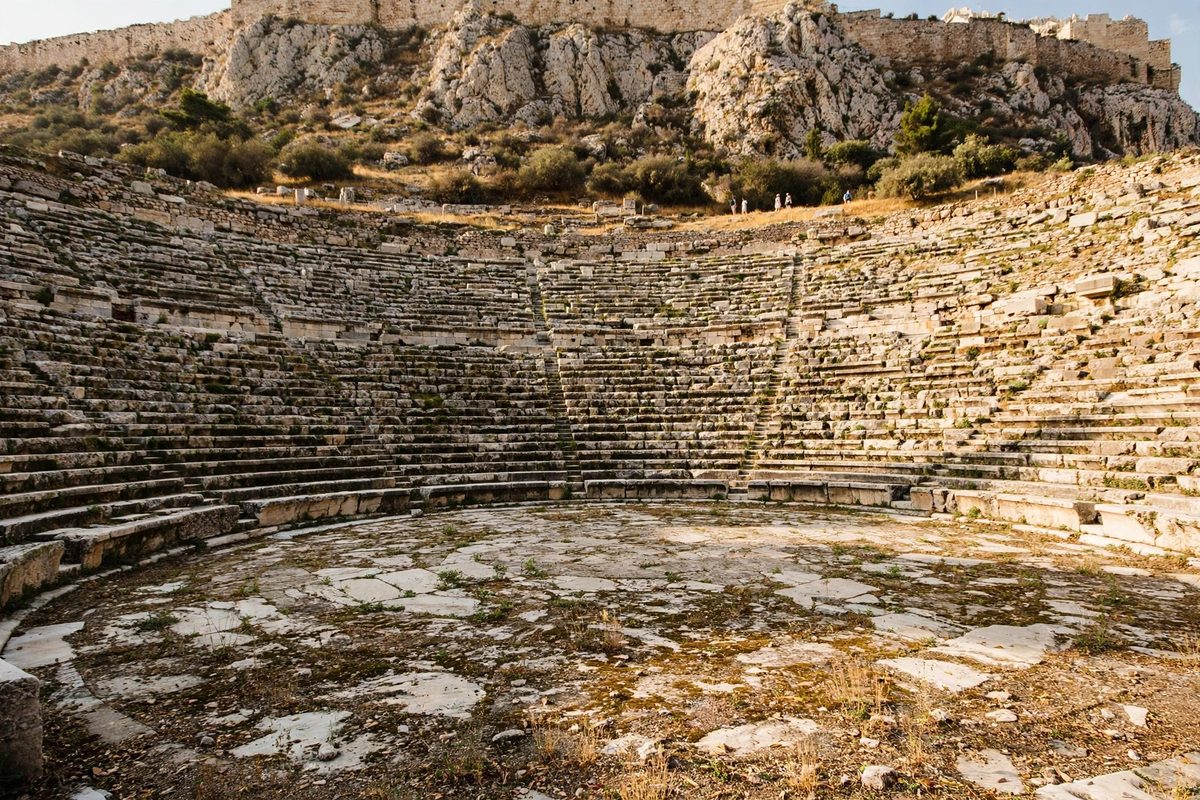
Long rows of worn limestone seats climb the slope from the orchestra floor, the remains of the stage building stand broken at the far side, and above the top rows the sheer rock of the Acropolis rises where the Parthenon stands.
Most visitors hurry past on their way up the hill. The theatre rewards the ones who stop: it is the oldest part of the whole Acropolis visit, and the easiest to picture full.
Sixty seven marble thrones were set into the front row for priests and officials, their names carved into the stone. Find the grandest at the centre, the throne of the priest of Dionysus Eleuthereus, its base worked into animal paws.
The flat circle at the bottom is where the chorus sang and danced. Stand there and look up the sweep of seats: the theatre’s acoustics were famed across the ancient world.
At the edge of the stage, look for the Roman period stage front carved with scenes from the myths of Dionysus. Behind it stand the remains of the sanctuary itself, the foundations of the god’s temple and the long stoa that once sheltered the festival crowds.
Do not confuse this theatre with the Herod Atticus Odeon nearby to the west. That is a later, smaller Roman theatre, and a different building.
The sanctuary of Dionysus Eleuthereus was established here in the 6th century BC, and the theatre grew out of the City Dionysia, Athens’ great spring festival for the god, where new plays competed for prizes.
For centuries the audience sat on wooden benches. The theatre took its lasting stone form under the statesman Lycurgus, in a rebuild finished around 330 BC that seated some 17,000 people.
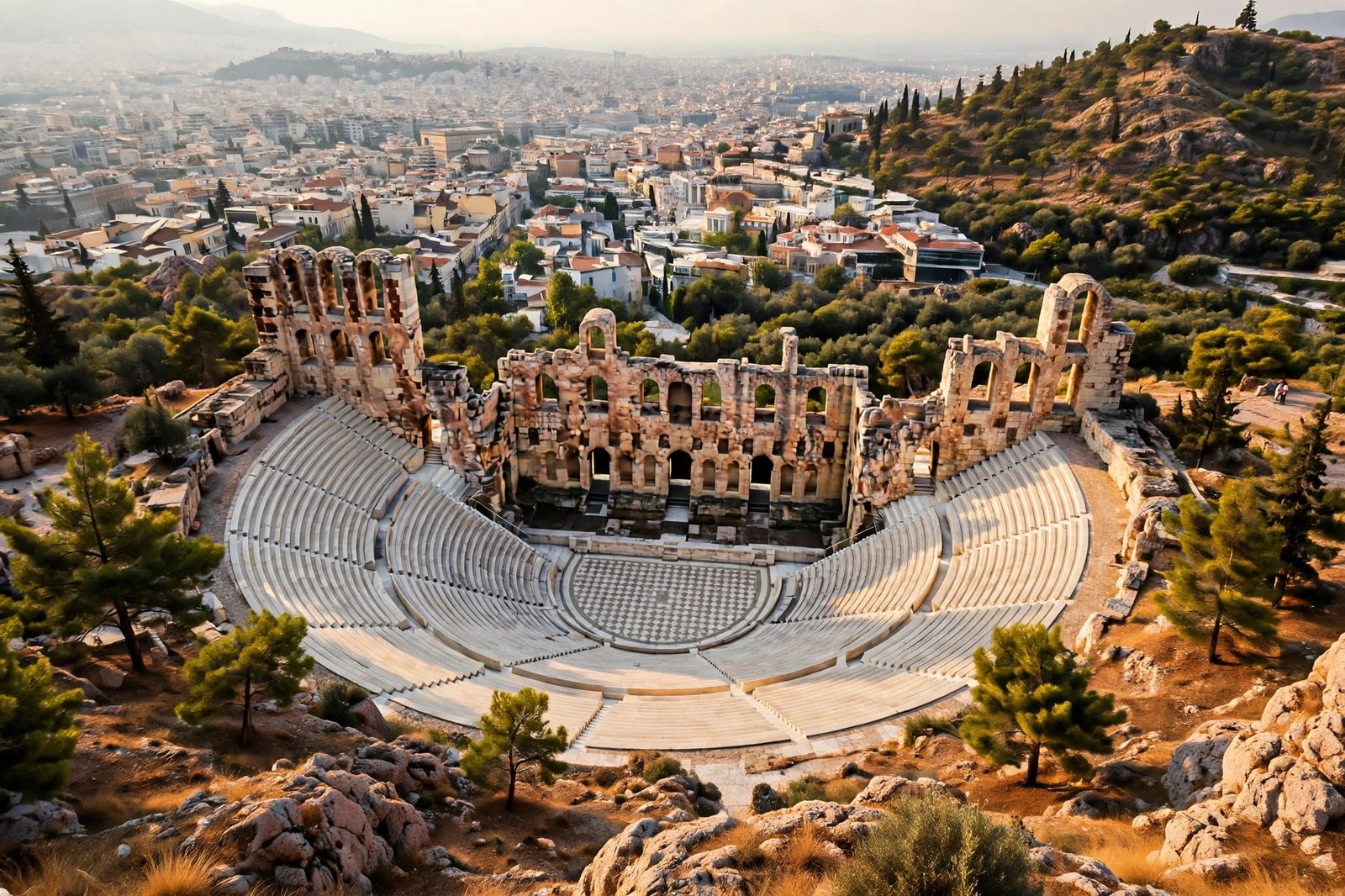 Herod Atticus Odeon
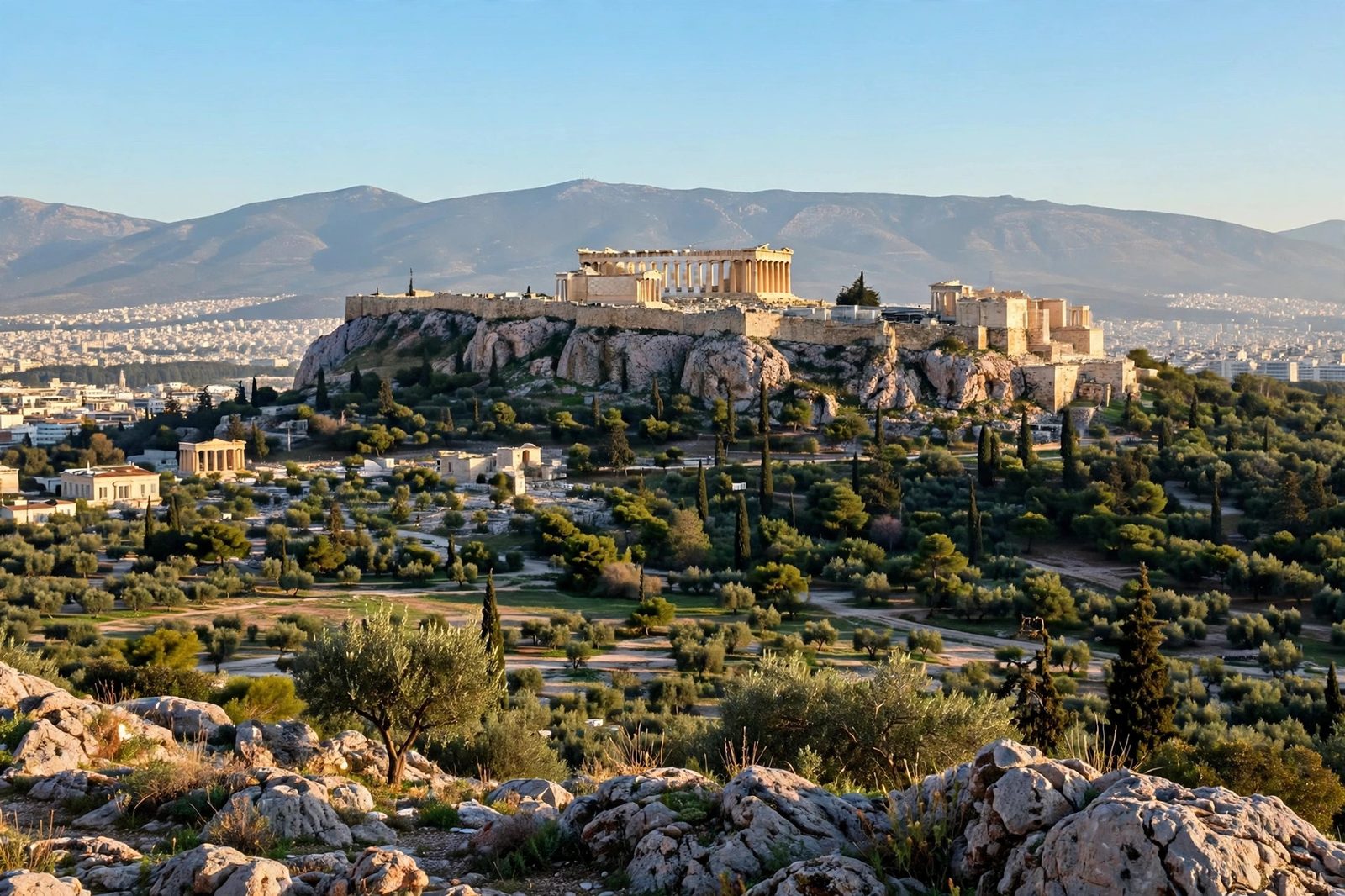 Acropolis of Athens
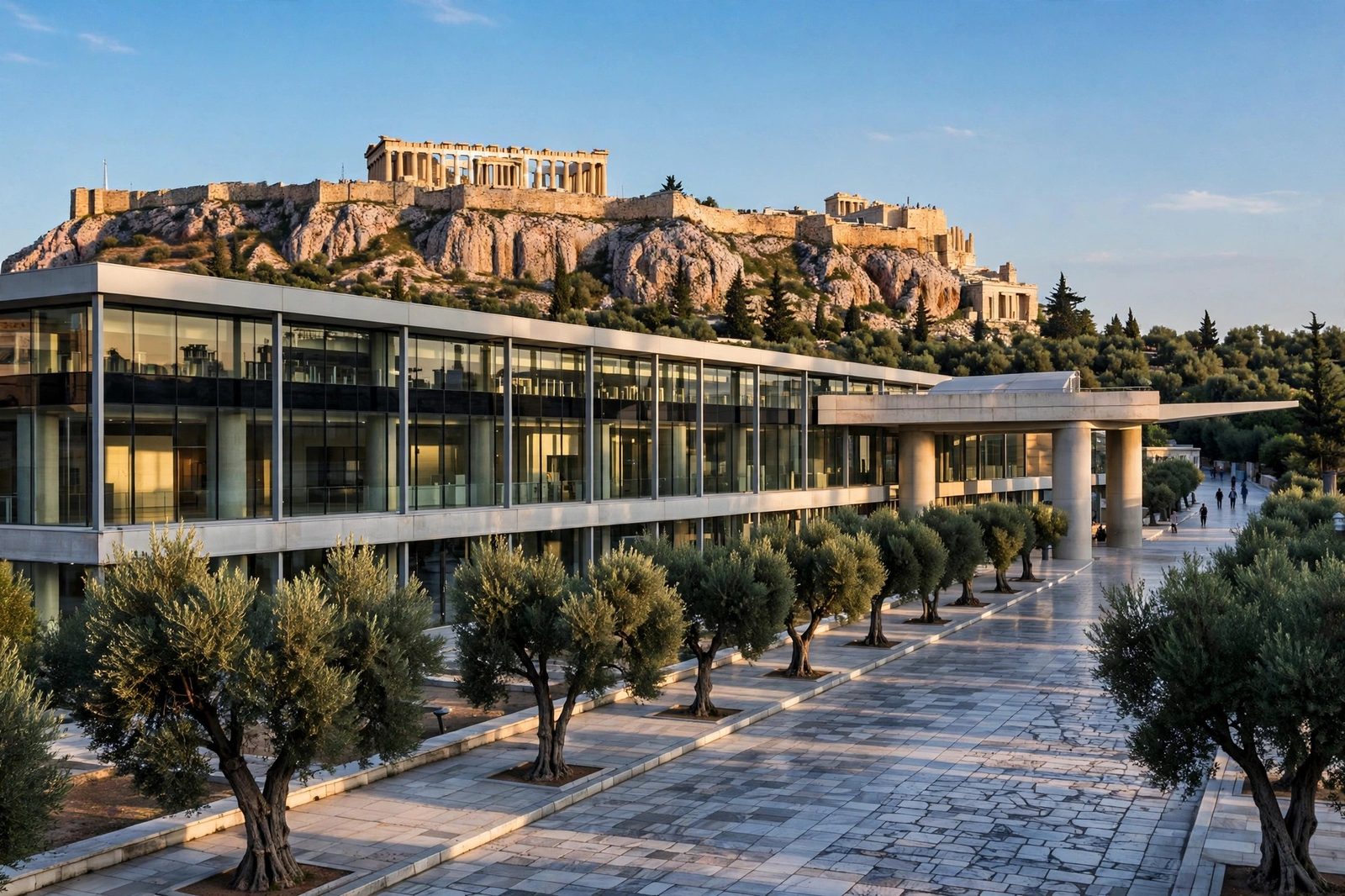 Acropolis Museum
This demo page rearranges the Zaila library page for Theatre of Dionysus into short parts, with the key facts up top and each photo placed next to the words it belongs with. The detail is still here, including the story and the practical notes. Use the breadcrumb at the top, the links in the text, and the nearby places above to browse out of this page and back in again.