
Loading
Loading
This demo is private. Sign in with the Google account it was shared with.
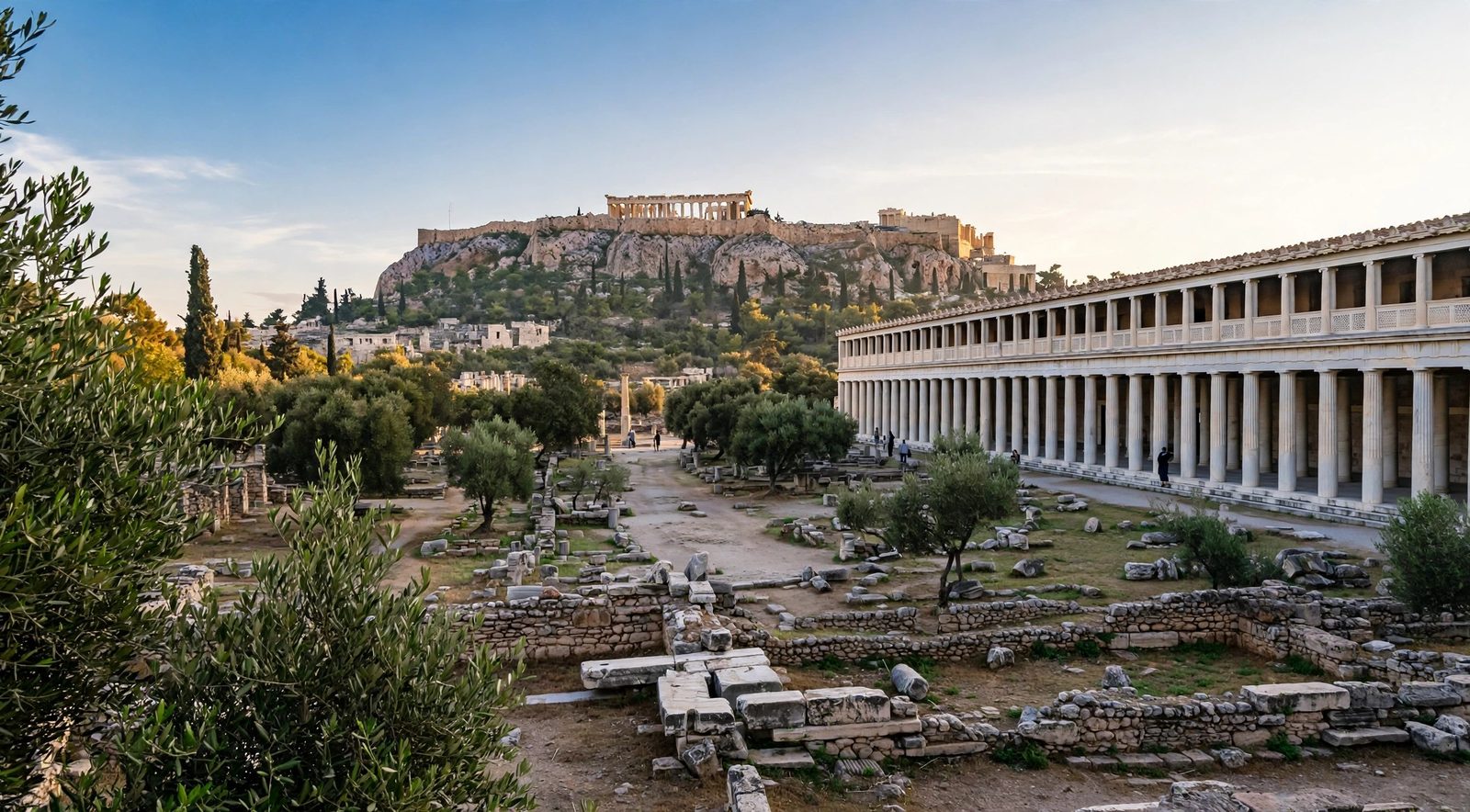
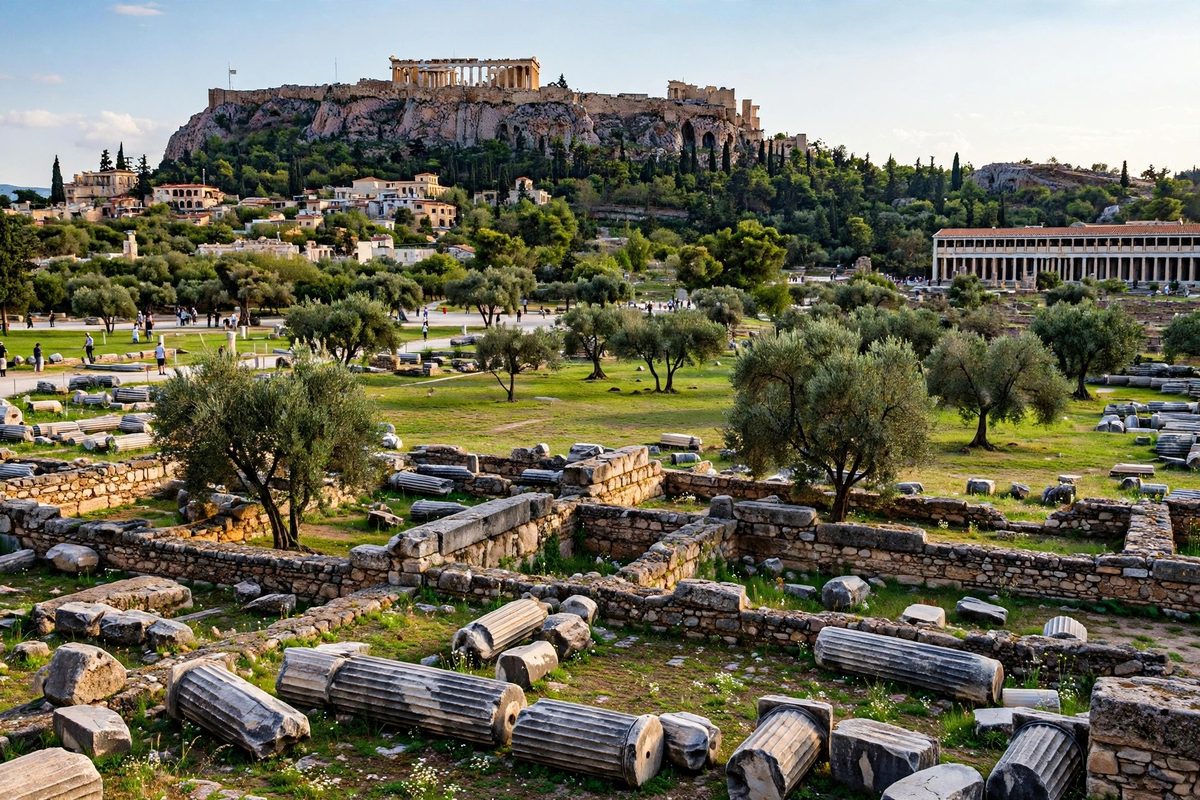
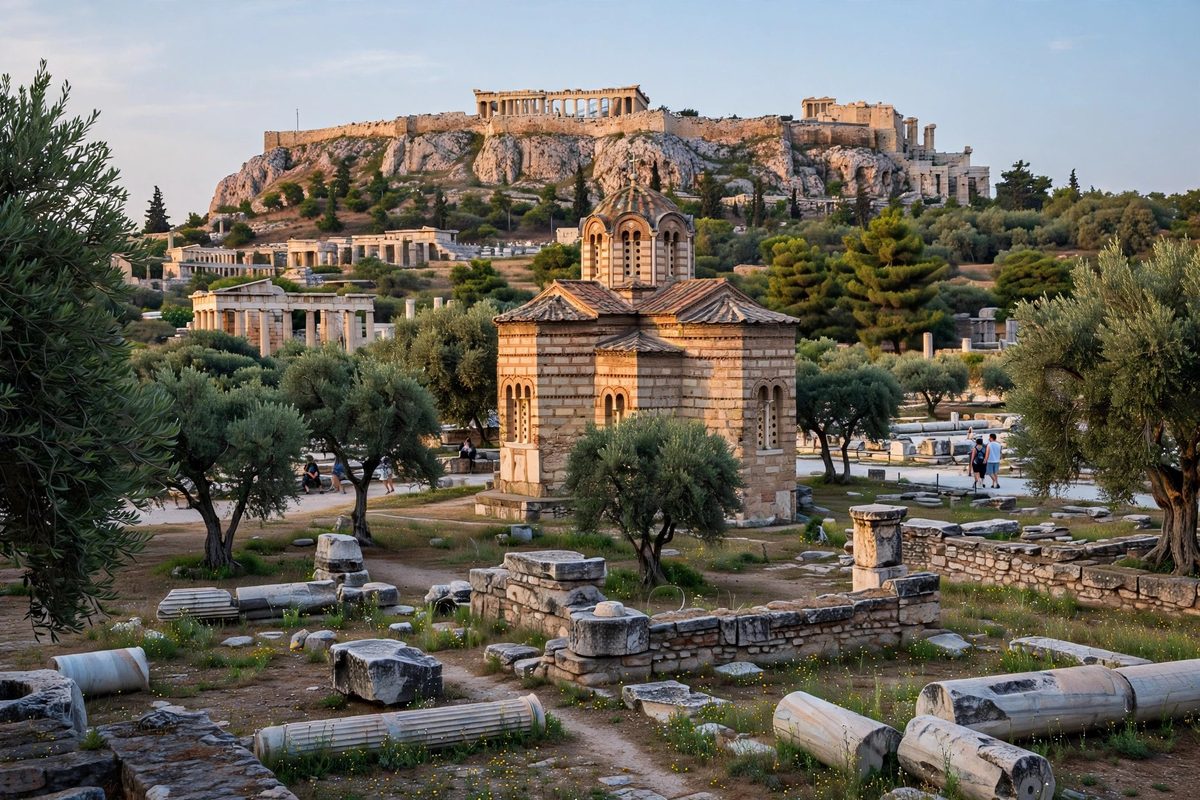
Where democracy did its daily business, in a green park of ruins under the best preserved temple in Greece.
TripAdvisor page · Google Maps
For more than a thousand years, this was the centre of Athens: shopping, voting, trials, worship and argument, all in one open space. Socrates walked here. Today it is a calm, green park at the northwest foot of the Acropolis, and it feels very different from the crowded rock above it.
Olive trees and low stone foundations spread across open ground between Monastiraki and Thissio. What survives is mostly at ground level, so the place rewards slow looking rather than spectacle.
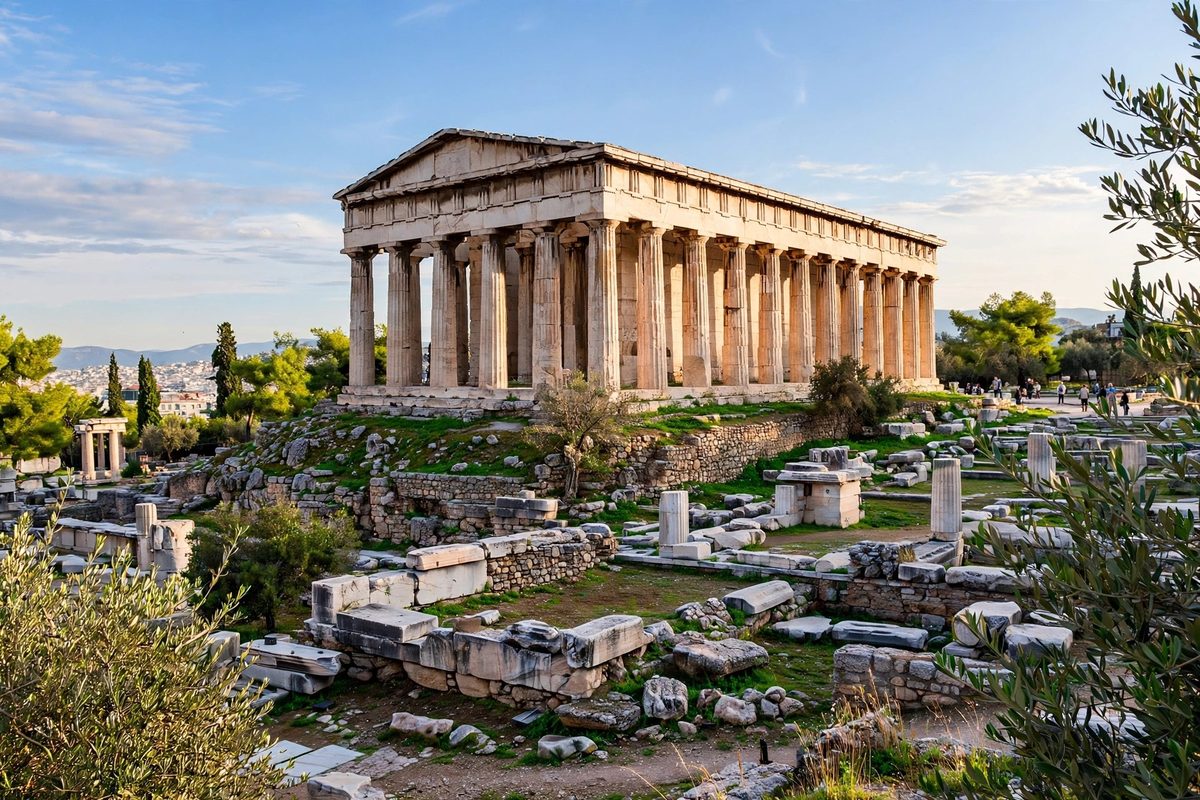
Two great exceptions frame the whole site: the Temple of Hephaestus on its western hill, and the long rebuilt Stoa of Attalos along the east side, with the Acropolis rising behind it all.
The museum here is about small, human objects: inscribed pottery shards used to exile citizens, bronze ballots, and the machine that assigned jurors to courts by lot. Democracy, handled in the hand.
The long stoa along the east side was rebuilt in the 1950s on its ancient lines, and the Agora Museum sits on its ground floor. Spend time there first; the objects give the ruins outside their meaning.
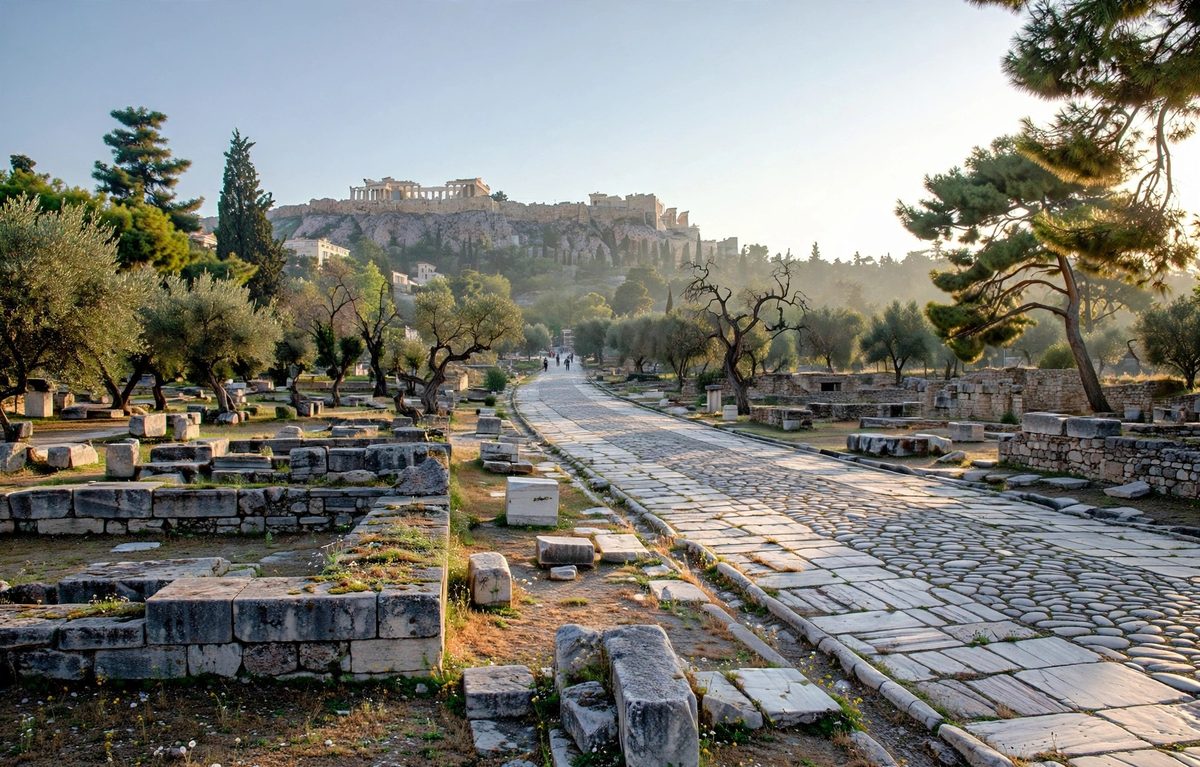
The great processional road crosses the site diagonally. Walk it past the foundations of the Bouleuterion, where the council of five hundred met, the round Tholos, and the Odeon of Agrippa.
Built in the 5th century BC and remarkably intact, with its Doric columns and roof still in place. You walk around it, not inside it, and the view back across the Agora to the Stoa and Acropolis is the classic one. Finish at the small Byzantine Church of the Holy Apostles near the south side.
From the 6th century BC, the Agora was where Athenians shopped, voted, stood trial, worshipped and argued. The council of five hundred met here, jurors were picked by lot here, and citizens could be exiled by a vote scratched on pottery shards here.
The Agora was the city’s living room as much as its office. Philosophers taught in its stoas, and Socrates spent his days in its workshops and colonnades, questioning anyone who would stop.
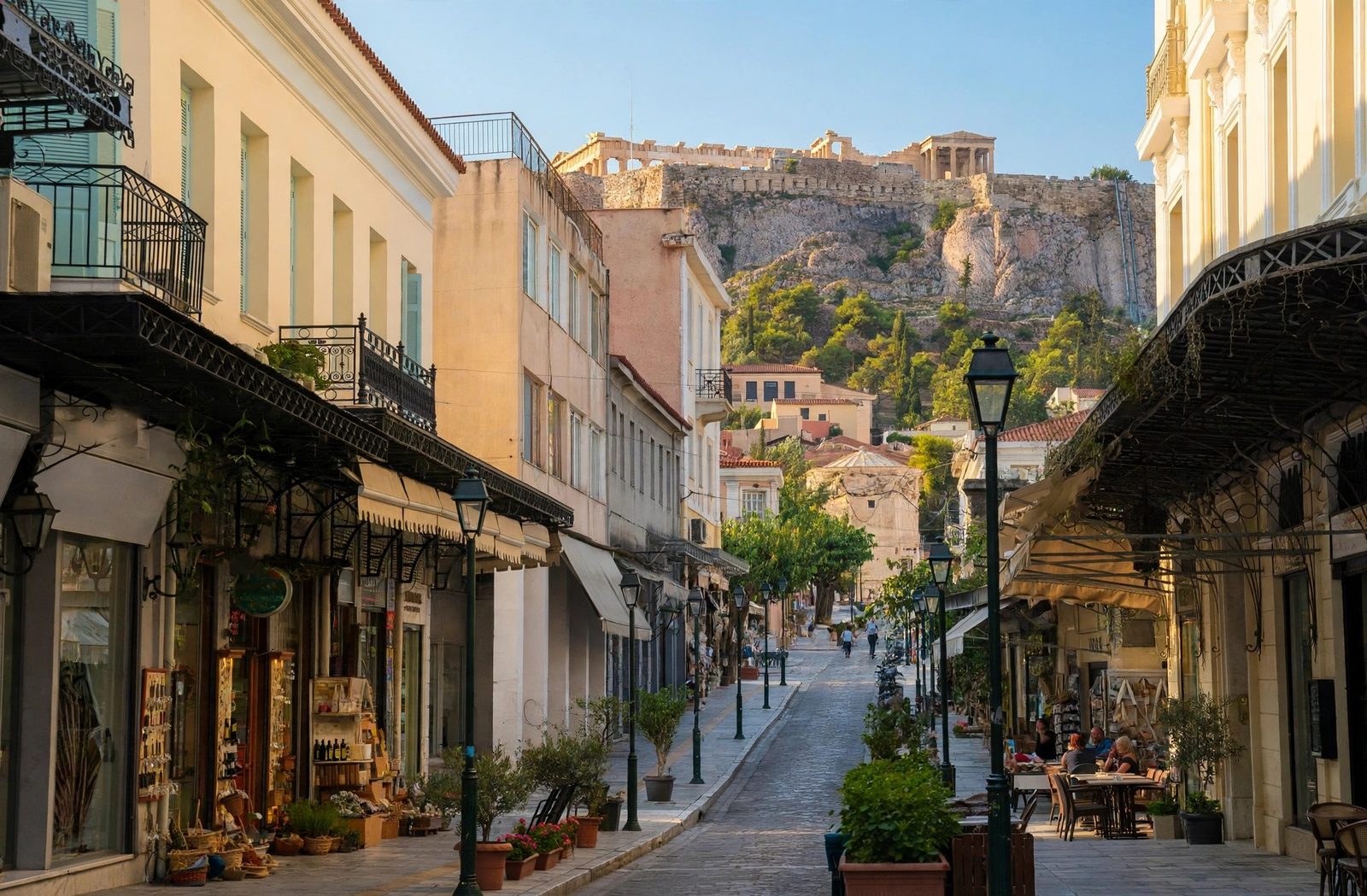 Plaka
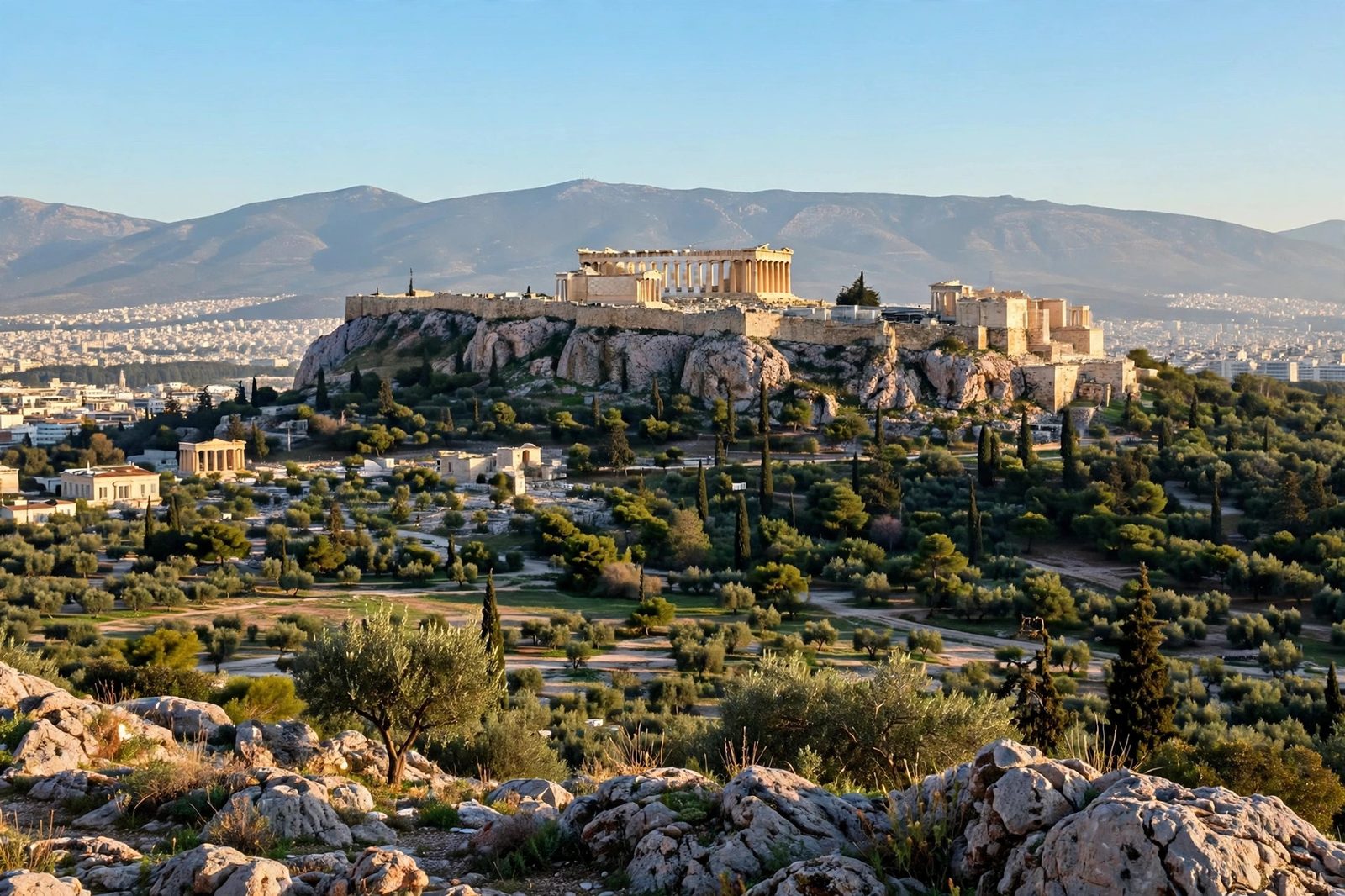 Acropolis of Athens
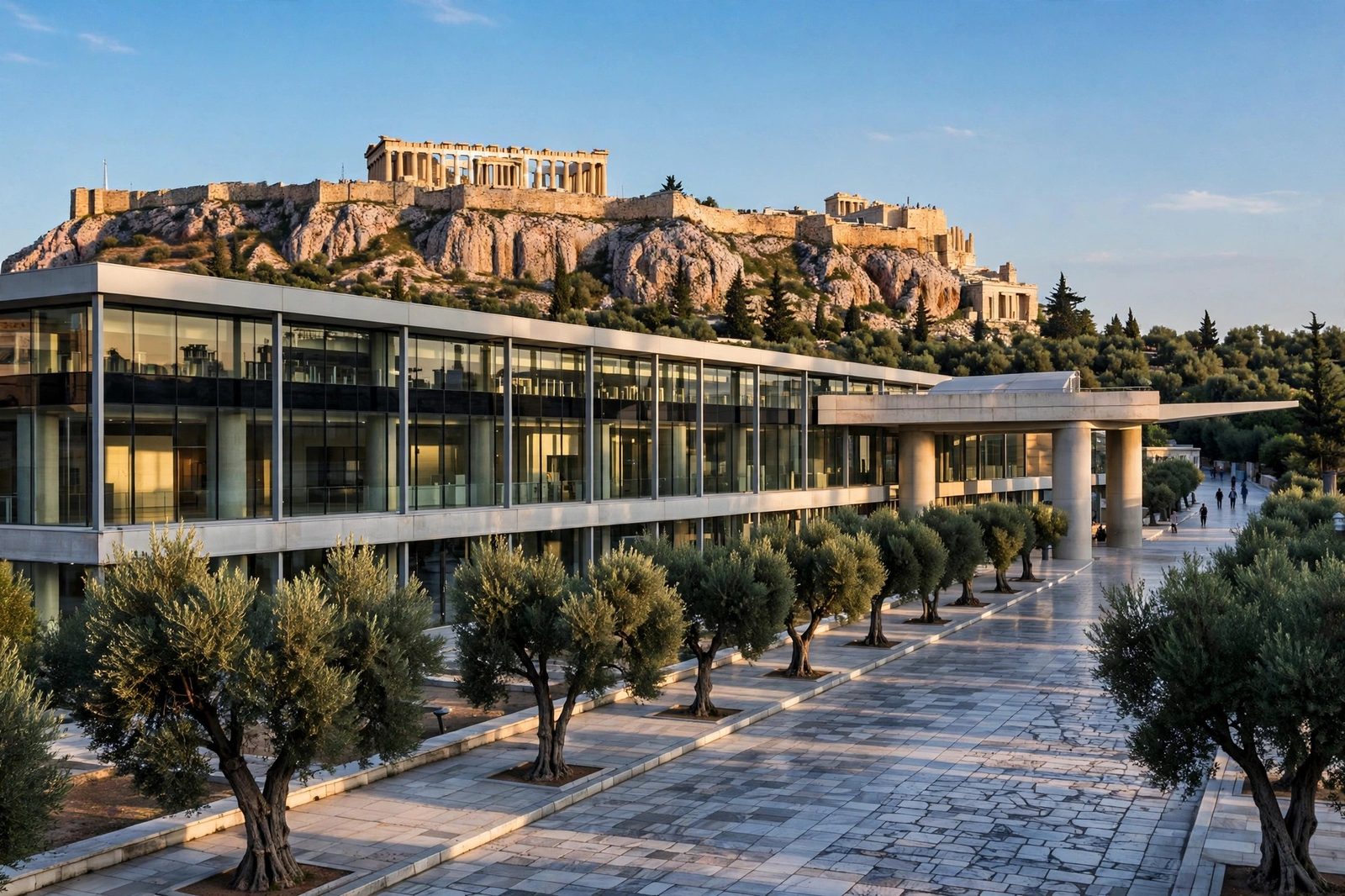 Acropolis Museum
This demo page rearranges the Zaila library page for Ancient Agora of Athens into short parts, with the key facts up top and each photo placed next to the words it belongs with. The detail is still here, including the story and the practical notes. Use the breadcrumb at the top, the links in the text, and the nearby places above to browse out of this page and back in again.